
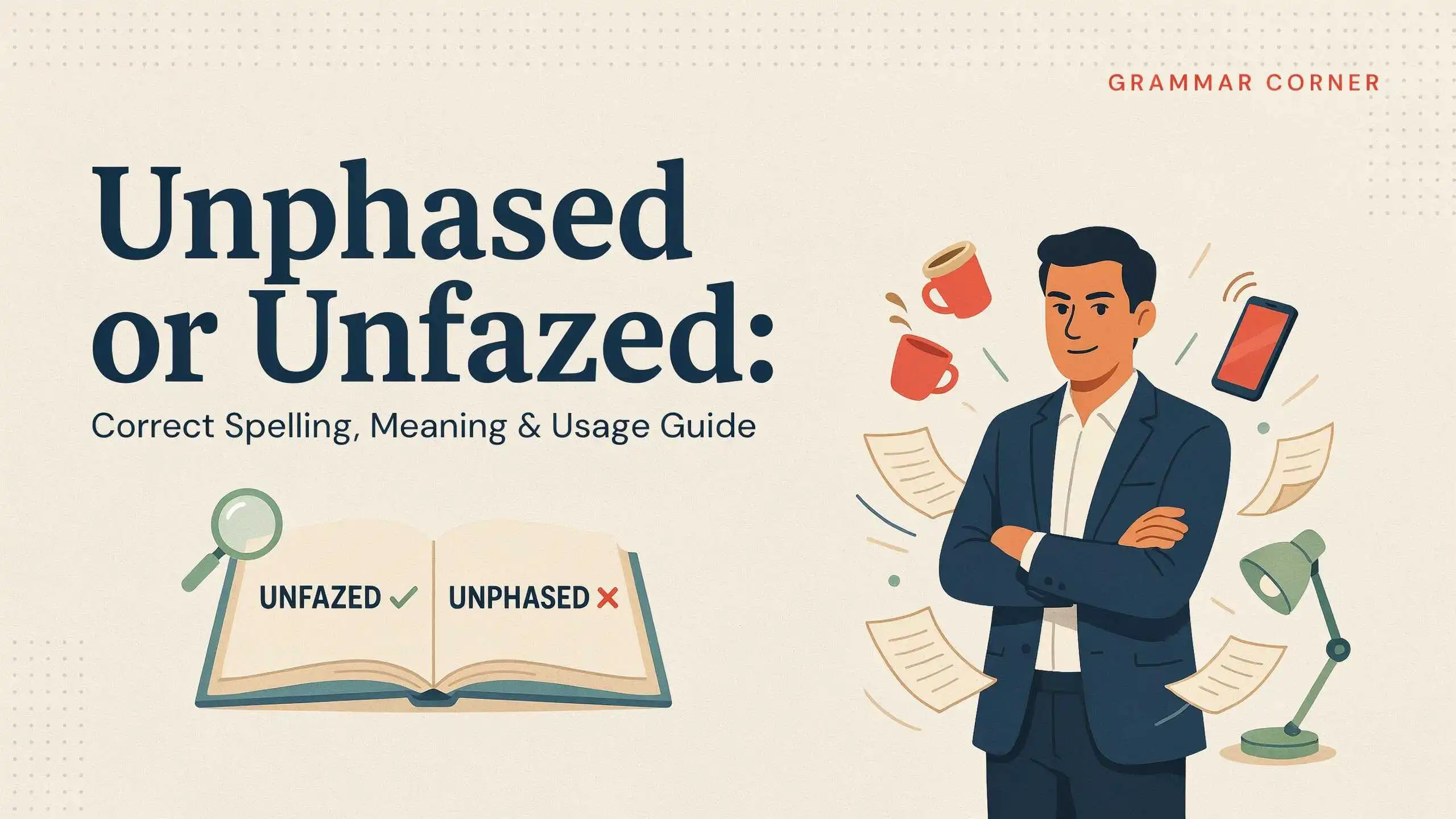
Unphased or unfazed is one of the most commonly confused spelling questions in English, especially among writers, students, and content creators. The correct spelling in standard English is “unfazed”, which means not disturbed, not worried, or not affected by something stressful or unexpected. On the other hand, “unphased” is usually considered a misspelling, although in rare technical contexts it can appear with a different meaning related to “phases.”
If you are wondering is it unfazed or unphased, the simple answer is: “unfazed” is correct in almost all situations, and it is the form you should use in writing, SEO content, academic work, and professional communication. This article will break down the unphased or unfazed meaning, differences, usage, examples, and memory tricks so you never confuse them again.
Is It Unfazed or Unphased?
When people search for is it unfazed or unphased, they are usually trying to confirm spelling correctness.
The answer is simple:
✔ Unfazed = Correct spelling (standard English) ✘ Unphased = Usually incorrect or non-standard
The confusion happens because both words sound almost identical, but they come from completely different root words:
- Faze → means to disturb or unsettle
- Phase → means a stage or step in a process
So when you say someone is unfazed, it literally means they are not disturbed.
Example:
- She was completely unfazed by the criticism. ✔
- She was completely unphased by the criticism. ✘ (incorrect in most cases)
AI Overview Summary
The correct spelling is “unfazed,” not “unphased.” The word unfazed means being calm, composed, and not disturbed or affected by stressful or unexpected situations. It comes from the root word “faze,” which means to disturb or unsettle, so unfazed literally means “not fazed.”
In contrast, “unphased” is commonly a spelling mistake when used in this context. The word phase refers to a stage or step in a process, which is unrelated to emotions or reactions. That is why unphased does not correctly express the meaning of being calm or unaffected.
In both British and American English, the correct spelling remains unfazed, and it is used to describe a positive trait of emotional stability and confidence under pressure.
Unphased or Unfazed Meaning Explained
Understanding the unphased or unfazed meaning is the key to avoiding confusion.
What Does Unfazed Mean?
The word unfazed means:
- Not worried or disturbed
- Calm under pressure
- Emotionally unaffected
- Mentally steady in difficult situations
Example Sentences:
- He remained unfazed during the emergency.
- She looked unfazed by the loud noise.
- The team was unfazed by the pressure of the final match.
In simple terms:
Unfazed = Calm + unaffected + emotionally stable
What Does Unphased Mean?
The word unphased is often used incorrectly in place of unfazed. However, it can sometimes appear in technical or specialized contexts related to “phases” or staged processes.
Rare technical usage:
- A project may be described as “unphased rollout,” meaning not divided into phases (rare and context-specific).
However, in modern everyday English, dictionaries and grammar experts consider it:
Mostly incorrect when used to mean “not disturbed.”
Laid or Layed: Correct Spelling, Grammar Rules, and Simple Guide to Lay vs Lie Confusion
Learn the spelling rules, regional differences, and real-world examples.
Unphased vs Unfazed: Key Differences
To clearly understand unphased vs unfazed, here is a comparison table:
| Feature | Unfazed | Unphased |
|---|---|---|
| Correct usage | ✔ Yes | ✘ Usually no |
| Meaning | Not disturbed or affected | Not divided into phases (rare) |
| Common usage | Very common | Very rare |
| Everyday English | Standard | Non-standard |
| Writing recommendation | Use this | Avoid |
Why Do People Confuse Unphased and Unfazed?
The confusion between unphased or unfazed happens due to several reasons:
1. Similar pronunciation
Both words sound almost identical when spoken.
2. Phase vs Faze confusion
People mix up:
- Faze = disturb
- Phase = stage
3. Autocorrect and spell-check errors
Many tools fail to flag “unphased” because it is still technically a real word in some contexts.
4. Social media usage
Informal writing spreads incorrect spelling patterns quickly.
Faze vs Phase: The Root of the Problem
To fully understand unfazed or unphased meaning, you must understand the root words.
What Does “Faze” Mean?
Faze means:
- To disturb
- To upset
- To shake someone’s confidence
Example:
- Nothing could faze her during the interview.
So:
Unfazed = NOT fazed = Not disturbed
What Does “Phase” Mean?
Phase refers to:
- A stage in a process
- A step in development
- A period of change
Example:
- The project is in its final phase.
So:
Unphased = not divided into phases (technical usage)
Is Unphased a Real Word?
Yes, unphased exists, but its usage is limited and often misunderstood.
In everyday grammar usage:
Unphased = considered incorrect when used instead of unfazed
However, in technical writing, engineering, or project management:
- It may describe a process not divided into phases
- It is still uncommon and context-dependent
Is it spelled unphased or unfazed?
The correct spelling is “unfazed”, not “unphased” in standard English usage.
Unfazed means someone is not disturbed, not worried, or not emotionally affected by something. For example, if a person stays calm during pressure or criticism, they are unfazed.
The word “unphased” is commonly used by mistake because it sounds similar, but it is not the correct word in this context. The confusion comes from mixing up:
- Faze = to disturb
- Phase = a stage or step
So, unfazed = not fazed (not disturbed).
What does being unfazed mean?
Being unfazed means staying calm, steady, and emotionally unaffected even in difficult or stressful situations.
It describes a person who does not panic or lose confidence when something unexpected happens.
For example:
- She was completely unfazed by the criticism.
- He remained unfazed during the emergency.
In simple terms, an unfazed person is:
Calm + confident + not easily disturbed
It is usually seen as a positive personality trait, especially in stressful environments.
How do you spell unfazed in England?
In British English, the spelling remains exactly the same:
Unfazed
There is no difference between British and American English for this word.
It is spelled and used the same way in:
- UK English ✔
- US English ✔
- Australian English ✔
- Canadian English ✔
So no matter where you are writing, the correct spelling is always unfazed.
Why is it unfazed and not unphased?
The correct form is unfazed because it comes from the word “faze,” which means:
to disturb, confuse, or unsettle someone.
So:
- Faze → disturbed
- Unfazed → not disturbed
On the other hand, “phase” means a stage or step in a process, which has nothing to do with emotions or disturbance.
That is why:
- ❌ Unphased = incorrect in emotional meaning
- ✔ Unfazed = correct usage meaning “not disturbed”
A simple memory trick is:
If it doesn’t faze you, you are unfazed.
Is “unpleased” a correct word?
Yes, “unpleased” is a correct English word, but it is rarely used in modern writing.
It means:
not satisfied, not happy, or displeased.
However, in most cases, English speakers prefer:
- displeased (more natural and common)
- not pleased (more conversational)
Example:
- He was unpleased with the result. (correct but uncommon)
- He was displeased with the result. (more natural)
So while unpleased is grammatically correct, it is not commonly used in everyday English.
Infront or in Front: Which Spelling Is Correct? (Simple Grammar Guide)
Learn the spelling rules, regional differences, and real-world examples.
Is unfazed good or bad?
The word “unfazed” is generally positive.
It describes someone who is:
- Calm under pressure
- Emotionally stable
- Not easily stressed or intimidated
Example:
- She stayed unfazed during the interview.
This is usually seen as a strength or good trait, especially in:
- Work environments
- Leadership situations
- High-pressure scenarios
However, in rare situations, it could be seen as neutral or slightly negative if someone expects emotional reaction (for example, not showing concern when needed).
But in most cases:
Unfazed = positive personality trait (confidence + calmness)
Can Unphased Ever Be Correct?
Yes, but only in rare cases.
Example (technical context):
- The system was implemented as an unphased deployment, meaning it was released all at once.
However, even in professional writing, most editors prefer:
“Single-phase” or “non-phased” instead of unphased
So in most SEO and content writing cases:
Avoid using “unphased” completely
Examples of Unfazed in Sentences
To master usage of unfazed, here are practical examples:
Everyday Usage
- She remained unfazed by the criticism.
- He looked unfazed despite the chaos.
- They were unfazed by the unexpected delay.
Professional Usage
- The manager was unfazed by the market crash.
- The CEO stayed unfazed during the crisis.
Academic Usage
- The researcher remained unfazed by conflicting results.
Incorrect vs Correct Usage Table
| Incorrect Sentence | Correct Sentence |
|---|---|
| She was unphased by the news. | She was unfazed by the news. |
| He seemed unphased during the event. | He seemed unfazed during the event. |
Synonyms of Unfazed
To improve vocabulary and SEO relevance:
- Unbothered
- Calm
- Composed
- Unruffled
- Unflappable
- Stoic
- Collected
- Unshaken
Antonyms of Unfazed
- Disturbed
- Worried
- Panicked
- Agitated
- Flustered
- Alarmed
How to Remember the Correct Spelling
Here is a simple memory trick:
If it doesn’t “faze” you, you are “unfazed.”
Another way:
- Faze = disturb
- Unfazed = not disturbed
This is the easiest way to avoid spelling mistakes in the future.
How Do You Pronounce Unfazed?
Unfazed is pronounced as:
/ʌn-feɪzd/
It has two syllables:
- un + fazed
Is Unfazed Formal or Informal?
Unfazed is widely used in:
- Formal writing ✔
- Academic essays ✔
- News writing ✔
- Professional communication ✔
- Casual speech ✔
It is a versatile word suitable for all contexts.
Is Unfazed Used in British and American English?
Yes, unfazed is used in both:
- British English ✔
- American English ✔
There is no difference in meaning or spelling.
Why Spell Check Misses “Unphased”
Many users wonder why tools do not always flag it.
Reasons include:
- “Unphased” exists in technical dictionaries
- Spell-check focuses on context, not meaning
- AI writing tools may treat it as valid
- Human proofreading is still necessary
Common Confusion Words
Like unphased or unfazed, English has many confusing pairs:
- Affect vs Effect
- Then vs Than
- Complement vs Compliment
- Stationary vs Stationery
- Peek vs Peak vs Pique
Quick Summary: Unphased or Unfazed
If you remember only this:
- Unfazed = correct spelling
- Means calm or unaffected
- Unphased = usually incorrect
- Confusion happens due to “faze vs phase”
Frequently Asked Questions
Is it unfazed or unphased?
The correct form is unfazed, meaning not disturbed or affected.
What does unfazed mean?
It means calm, composed, and not emotionally affected.
Is unphased a real word?
Yes, but it is rarely used and not correct in most everyday contexts.
Can unphased ever be correct?
Only in rare technical contexts related to phases or processes.
Why do people confuse unphased and unfazed?
Because “faze” and “phase” sound similar and are often mixed up.
What is the difference between faze and phase?
“Faze” means to disturb, while “phase” means a stage or step.
Conclusion
If you are confused between unphased or unfazed, remember this simple rule:
The correct spelling is “unfazed” in almost all cases.
It means someone is calm, unaffected, and emotionally strong in difficult situations. While unphased may appear in rare technical contexts, it is generally considered incorrect in everyday English writing.
To master it forever:
If it doesn’t faze you, you are unfazed.