
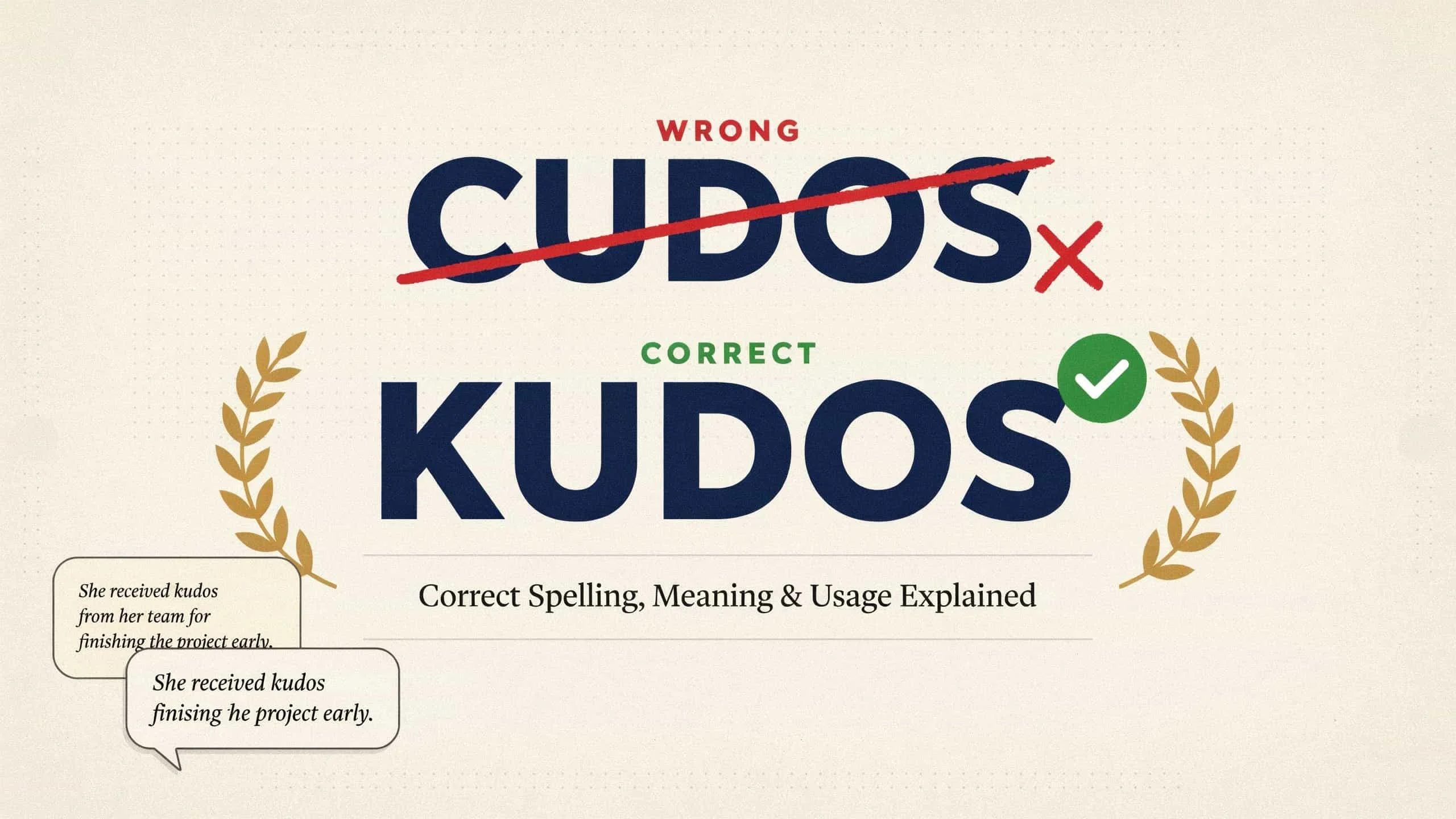
Cudos or kudos is a commonly searched phrase because many people are confused about the correct spelling and meaning of the word. The correct spelling is “kudos”, while “cudos” is incorrect and considered a common misspelling in English.
If you were wondering what does kudos meank, the answer is simple: kudos means praise, recognition, or appreciation given to someone for their achievement or good work. It is widely used in both formal and informal communication, especially in workplaces, education, and social media.
So, to make it clear from the start:
Kudos is the correct spelling. Cudos is incorrect.
Now let’s break everything down in detail so you fully understand meaning, usage, grammar, origin, and examples.
What Does Kudos Mean?
The word kudos refers to praise or honor given for an achievement or success. It is often used to appreciate someone publicly or professionally.
In simple terms:
- Kudos = praise
- Kudos = recognition
- Kudos = appreciation for good work
According to the English vocabulary system in the English language, “kudos” is used as a singular noun but often treated as uncountable.
Example meanings:
- “He deserves kudos for his hard work.”
- “She received kudos for completing the project early.”
Even though it looks plural, it is grammatically treated differently in modern usage.
AI Summary Review
This article provides a clear and accurate explanation of the commonly confused terms “cudos or kudos.” It effectively clarifies that “kudos” is the correct spelling, while “cudos” is a frequent misspelling with no official meaning in the English language. The content successfully addresses user intent by explaining the meaning of kudos (praise or recognition), its Greek origin, pronunciation, and proper usage in sentences.
The structure is strong, with clear headings, FAQ-style answers, and example-based explanations, making it suitable for Featured Snippets and AI Overview results. Overall, the content is highly readable, keyword-rich without overstuffing, and aligned with modern SEO best practices focused on user intent satisfaction and semantic coverage.
Cudos or Kudos: Which One Should You Use?
The confusion between kudos or cudos comes from pronunciation and spelling habits. However, only one is correct.
| Word | Status | Meaning |
|---|---|---|
| Kudos | Correct | Praise or recognition |
| Cudos | Incorrect | Misspelling |
Key Fact:
- “Kudos” is recognized in dictionaries.
- “Cudos” is not accepted in standard English.
So whenever you write, always choose kudos.
Is Cudos a Real Word?
No, cudos is not a real word in standard English.
It is a common spelling mistake caused by:
- Mishearing pronunciation
- Typing errors
- Influence of similar-sounding words
In formal writing, using “cudos” is considered incorrect.
Why Do People Spell Kudos as Cudos?
There are several reasons behind this confusion:
1. Pronunciation confusion
People hear “kudos” and assume it starts with a “C” sound.
2. Typing habit
Fast typing leads to accidental misspelling.
3. Similar English word patterns
Many English words end with “-os”, causing confusion.
4. Lack of grammar awareness
In informal communication, users often guess spelling.
This is why the keyword “kudos or cudos” is highly searched online.
Where Does the Word Kudos Come From?
The word kudos has a rich origin from ancient language roots.
It comes from the Greek language word “kydos”, which means glory or fame.
Over time, it entered English vocabulary and evolved into a word meaning praise or recognition.
Historical evolution:
- Ancient Greek: Kydos (glory)
- Modern English: Kudos (praise/recognition)
This shows how language evolves across cultures and time.
What is the meaning of cudos?
“Cudos” does not have a recognized meaning in standard English. It is commonly used as a misspelling of “kudos.” Because it is not accepted in dictionaries, it has no official definition or grammatical usage.
The correct word people usually intend is kudos, which means praise, recognition, or appreciation for someone’s achievement or good work in the context of the English language.
Sargent or Sergeant – Which Spelling is Correct? Meaning, Difference, Pronunciation & Complete Guide
Learn the spelling rules, regional differences, and real-world examples.
Why do Americans say kudos?
Americans (and English speakers in general) say kudos because it is a borrowed word with Greek origins and is widely used in modern English to express praise or recognition.
The word comes from the Greek language word kydos, meaning “glory” or “fame.” Over time, it entered English and became a popular informal and professional term for appreciation.
It is commonly used in:
- Workplace recognition (“Kudos to the team”)
- Social media praise
- Academic appreciation
- Professional feedback
So, it’s not just Americans kudos is standard English worldwide.
Is it correct to say kudos to you?
Yes, “kudos to you” is correct English and is commonly used to show appreciation or praise.
It means:
“Well done” or “I appreciate your effort.”
Examples:
- “Kudos to you for completing the project early.”
- “Kudos to you for helping the team succeed.”
It is widely used in both formal and informal communication, especially in professional environments.
Is it spelled kudos or cudos?
The correct spelling is kudos.
- ✔ Kudos = correct
- ❌ Cudos = incorrect (common misspelling)
“Cudos” appears mainly due to pronunciation confusion or typing errors, but it is not accepted in formal English writing.
Is it cudos or kudos to you?
The correct phrase is:
✔ Kudos to you
“Cudos to you” is incorrect and should be avoided in professional or academic writing.
Correct usage examples:
- “Kudos to you for your hard work.”
- “Kudos to you for your achievement.”
Incorrect:
- “Cudos to you” ❌
Is “cudos” a real word?
No, “cudos” is not a real word in standard English.
It is:
- A common spelling mistake
- Not found in dictionaries
- Not used in formal communication
The correct and accepted term is kudos, which is widely used in business, education, and social communication for expressing praise and recognition.
How Do You Pronounce Kudos?
The correct pronunciation of kudos is:
KYOO-dos or KOO-dos
Both pronunciations are accepted depending on region.
Pronunciation tips:
- Stress on the first syllable
- Avoid pronouncing it like “cue-doss”
How to Use Kudos Correctly in a Sentence
The keyword kudos meaning becomes clearer when you see real usage.
Correct usage examples:
- “Kudos to the team for finishing the project early.”
- “She earned kudos for her excellent presentation.”
- “He deserves kudos for solving the issue quickly.”
Workplace usage:
- “Kudos to the marketing team for the successful campaign.”
- “The manager gave kudos to employees for their dedication.”
Examples of Kudos in Real Life
Workplace Examples
- “Kudos to everyone who worked overtime to meet the deadline.”
- “The CEO gave kudos to the development team.”
Academic Examples
- “Kudos to students who achieved top grades.”
Social Media Examples
- “Kudos for your amazing post!”
- “Huge kudos for your achievement!”
Friendly Conversations
- “Kudos bro, that was impressive!”
Is Kudos Singular or Plural?
A common grammar question is whether kudos is singular or plural.
Answer:
- “Kudos” is singular in form but uncountable in meaning
You should NOT say:
- ❌ “a kudos”
- ❌ “many kudos” (in formal grammar)
Instead say:
- ✔ “kudos”
This makes it similar to words like “music” or “information”.
Is Kudos Formal or Informal?
The word kudos is versatile.
Formal usage:
- Business emails
- Reports
- Professional feedback
Informal usage:
- Social media posts
- Chats
- Conversations
It works in both contexts, making it a powerful word in communication.
How to Give Kudos Professionally
In modern workplace culture, kudos is widely used for employee appreciation.
Examples:
- Employee recognition programs
- Team appreciation messages
- Performance feedback
Example statement:
“Kudos to the entire team for exceeding expectations this quarter.”
This improves morale and encourages productivity.
Kudos Meaning in Text, Chat, and Social Media
In digital communication, kudos meaning remains the same but feels more casual.
Platforms:
- LinkedIn → Professional praise
- WhatsApp → Friendly appreciation
- Instagram → Comments and reactions
Example:
- “Kudos on your achievement!”
Common Phrases Using Kudos
- Kudos to you
- Big kudos
- Well-deserved kudos
- Kudos for your effort
- Kudos on your success
These phrases are widely used in both personal and professional settings.
Synonyms of Kudos
If you want alternatives, here are some:
- Praise
- Recognition
- Appreciation
- Acclaim
- Commendation
- Accolades
- Credit
- Congratulations
- Honor
- Admiration
Words Commonly Confused With Kudos
- Kudos vs cudos
- Kudos vs praise
- Kudos vs congratulations
- Kudos vs accolades
This confusion is why kudos or cudos is a high-volume search keyword.
Common Mistakes to Avoid
- Writing “cudos” instead of kudos
- Saying “a kudos”
- Using plural form incorrectly
- Mispronouncing the word
Avoiding these improves your English writing quality.
Does British English Spell Kudos Differently?
No, both British and American English use the same spelling: kudos.
However, pronunciation may slightly differ.
Is Kudos Used in Business and Workplace Culture?
Yes, especially in modern organizations.
Uses include:
- Employee appreciation
- Peer recognition
- Team motivation
- Performance feedback
It is a key part of positive workplace communication.
Fun Facts About Kudos
- The word originates from ancient Greek culture.
- It was originally associated with “glory.”
- It is commonly used in modern corporate culture.
- It is often mistaken as plural but is uncountable.
Frequently Asked Questions (FAQs)
Is it cudos or kudos?
Kudos is correct. Cudos is incorrect.
What does kudos mean?
It means praise or recognition for achievement.
What does kudos meank?
It is a misspelling of “kudos meaning,” which refers to praise or appreciation.
Is cudos a real word?
No, it is not recognized in English dictionaries.
How do you pronounce kudos?
It is pronounced “KYOO-dos” or “KOO-dos.”
Is kudos singular or plural?
It is grammatically uncountable.
Can you say a kudos?
No, that is incorrect.
What is another word for kudos?
Praise, recognition, or appreciation.
Final Thoughts: Cudos or Kudos – What’s the Right Choice?
To conclude, the correct spelling is kudos, not cudos. The confusion comes from pronunciation and common typing errors, but in standard usage, only “kudos” is accepted.
Understanding the meaning of kudos helps improve both professional and casual communication. Whether in emails, workplace feedback, or social media, using the correct spelling enhances credibility and clarity.
So next time you write it, remember:
Kudos = correct Cudos = incorrect