
Finalize or finalise — which one is correct?
If you’ve ever paused while writing an email, article, contract, or assignment because of this spelling, you’re not alone. It’s one of those English language questions that seems simple at first… until you realize both versions exist.
Here’s the thing most people miss:
This is not really about “right vs wrong.” It’s about audience, consistency, and context.
And in 2026, that matters even more because AI writing tools, spellcheck software, and global audiences often mix American and British English together.
Let’s clear it up properly.
Quick Answer
“Finalize” is the preferred spelling in American English, while “finalise” is more common in British English. Both are grammatically correct depending on your audience and writing style. If you write for US readers, use finalize. For UK readers, finalise is usually preferred. The most important rule is consistency throughout your writing.
Finalize vs Finalise: Fast Decision Guide
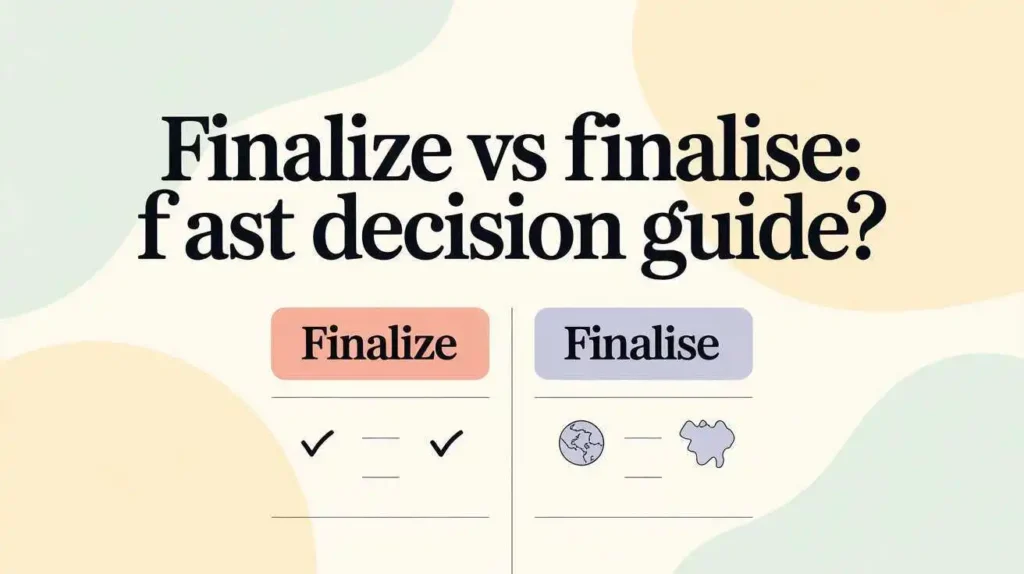
| Audience | Recommended Spelling |
|---|---|
| United States readers | finalize |
| United Kingdom readers | finalise |
| International audience | either, but stay consistent |
| Academic/Oxford style | finalize is acceptable |
| US-focused blogs and SEO content | finalize |
| Traditional UK publications | finalise |
Most professional editors care more about consistency than strict spelling preference. Pick one system and stick with it throughout your document.
Is It “Finalize” or “Finalise”?
Both spellings are correct.
The difference comes down to regional English.
- Finalize = American English spelling
- Finalise = British English spelling
The meaning stays exactly the same. Both words mean:
to complete, confirm, or officially finish something.
For example:
- We need to finalize the contract today.
- The company will finalise the agreement tomorrow.
Same meaning. Different audience expectations.
Simple.
What Does “Finalize” Mean?
The word finalize means to complete something officially or make it permanent.
You’ll often see it used in:
- business writing
- contracts
- project management
- legal documents
- publishing
- software development
Examples
- The team finalized the website design yesterday.
- We need to finalize the budget before Friday.
- The lawyer finalized the paperwork.
In American English, this is the standard spelling.
What Does “Finalise” Mean?
Finalise means exactly the same thing. It’s simply the British English spelling variation.
You’ll commonly see it in:
- UK newspapers
- British schools
- Commonwealth countries
- British business communication
Examples
- The editor finalised the article before publication.
- They finalised the travel arrangements last week.
- The company finalised its merger plans.
Most people assume “-ize” is only American. But that’s not entirely true.
We’ll get to that in a moment.
Finalize vs Finalise: What’s the Difference?
The only real difference between finalize or finalise is the spelling style used in different forms of English.
| Feature | Finalize | Finalise |
|---|---|---|
| English type | American English | British English |
| Common in USA | Yes | Rare |
| Common in UK | Less common | Yes |
| Meaning | Same | Same |
| Professional usage | Accepted | Accepted |
| Common in business writing | Very common | Common in UK |
There’s no difference in pronunciation or meaning.
That’s important.
A lot of people think one version is “more correct.” It isn’t.
READ MORE >>> Mines and Mine: Meaning, Difference, and How to Use Them Correctly in English Grammar
Which Spelling Should You Use?
This is the part competitors usually oversimplify.
The best spelling depends on:
- your audience
- your location
- your writing purpose
- your brand style
Here’s a practical rule:
Use the spelling your readers expect to see.
That instantly makes your writing feel more natural and professional.
Use “Finalize” for American Audiences
If your audience is mainly in the United States, use finalize.
This includes:
- American blog readers
- US clients
- SEO content targeting the USA
- startup websites
- software companies
- US academic writing
Example
If you write:
“We will finalise your order shortly.”
American readers may notice the spelling immediately because it feels unfamiliar.
That doesn’t make it wrong. It just feels less localized.
Use “Finalise” for British Audiences
If you’re writing for UK readers, British schools, or local UK publications, finalise usually feels more natural.
You’ll often see this spelling in:
- British newspapers
- UK government writing
- local business communication
- British education systems
What About Global Audiences?
This is where things get interesting.
Many international brands now use a single English style globally.
And honestly? That’s usually smarter.
Most people miss this:
Readers care more about consistency than the exact spelling choice.
If your article switches between:
- finalize
- finalise
- optimize
- optimise
…it starts looking messy.
Sometimes even AI-generated.
The Audience-First Spelling Framework™
Here’s a simple framework to make the decision easier.
Step 1: Identify Your Audience
Ask yourself:
- Are they American?
- British?
- International?
That answer usually solves the problem immediately.
Step 2: Match the Writing Context
Different industries have different expectations.
| Writing Type | Recommended Style |
|---|---|
| US business writing | finalize |
| UK publishing | finalise |
| International tech content | usually finalize |
| Academic writing | depends on style guide |
| Legal documents | match jurisdiction |
Step 3: Stay Consistent
This matters more than people realize.
A document that mixes:
- finalise
- organize
- optimize
- realize
with:
- finalized
- color
- center
feels inconsistent.
Professional editors notice it instantly.
Step 4: Check Your Writing Tools
AI tools and spellcheck systems often cause confusion.
For example:
- Grammarly may default to American English
- Microsoft Word may auto-correct British spelling
- Google Docs follows language settings
- AI writing tools sometimes mix both styles
That’s why you should always set your preferred English version before writing.
Why Does British English Sometimes Use “-ise” Instead of “-ize”?
This question has a surprisingly interesting answer.
British English adopted many “-ise” spellings through French influence over time. That’s why words like:
- organise
- realise
- finalise
became common in the UK.
But here’s the twist:
“-ize” is actually older historically.
It comes from the Greek suffix “-izein,” which later entered English through Latin.
So technically, finalize is not purely American.
That surprises a lot of people.
Why Oxford Still Uses “-ize”
This is one of the biggest misconceptions online.
Many people think:
“-ize” = American English only.
Not true.
Oxford English traditionally prefers:
- organize
- realize
- finalize
even in British English.
So if you use finalize in UK writing, it isn’t automatically incorrect.
It depends on the style guide being followed.
That nuance is missing from most articles online.
Finalising or Finalizing: Which Version Is Correct?
The same regional rule applies to verb forms.
| American English | British English |
|---|---|
| finalize | finalise |
| finalized | finalised |
| finalizing | finalising |
| finalization | finalisation |
So:
- finalizing or finalising
- finalized or finalised
- finalization or finalisation
all follow the same pattern.
Finalized or Finalised: Are Both Grammatically Correct?
Yes. Both are grammatically correct.
The difference is simply the English system you’re using.
American English Example
- The company finalized the agreement yesterday.
British English Example
- The company finalised the agreement yesterday.
Neither sentence is wrong.
Finalization or Finalisation: Which Should You Use?
Again, this depends on your audience.
Use “finalization” if:
- your readers are American
- your content targets US traffic
- your company uses American English
Use “finalisation” if:
- your audience is British
- your publication follows UK style rules
Real-life examples
- The finalization of the merger took months.
- The project finalisation process is now complete.
How AI Writing Tools Accidentally Mix UK and US English
This is becoming a huge issue in 2025 and 2026.
AI tools often combine spelling systems without realizing it.
For example, you might see:
- optimize
- colour
- finalised
- center
all in the same article.
That creates inconsistency.
And readers notice.
Mini Case Study
A marketing agency publishing global blog content noticed something strange:
Their articles mixed:
- finalize
- finalise
- organize
- optimise
Traffic wasn’t the issue. Trust was.
Some readers assumed the content was poorly edited or AI-generated.
So the company created a simple internal style rule:
Use American English for all global content.
After standardizing their spelling:
- editing became easier
- brand consistency improved
- user trust increased
Small change. Big impact.
Common Mistakes People Make
Here are the biggest mistakes writers make with finalize or finalise.
Mixing English Systems
This is the most common issue.
Example:
- finalise
- organize
- color
That combination feels inconsistent.
Blindly Trusting Spellcheck
Spellcheck tools only follow your language settings.
They are not universal grammar authorities.
Changing Styles Mid-Document
If you start with British English, stay with it.
Same for American English.
Pros and Cons of Each Spelling
Finalize
Pros
- standard in American English
- common in business writing
- widely accepted internationally
- preferred in many tech industries
Cons
- may feel Americanized to some UK readers
Finalise
Pros
- familiar to British readers
- aligns with UK publishing standards
- common in Commonwealth English
Cons
- may trigger US spellcheck corrections
Finalize or Finalise: Which Looks More Professional?
Here’s the truth:
Neither spelling is automatically more professional.
Professionalism comes from consistency.
If your audience is American and you use British spelling randomly, it may look out of place.
The same works in reverse.
Most experienced editors care less about the spelling itself and more about:
- consistency
- readability
- audience alignment
That’s what creates polished writing.
Frequently Asked Questions
Is “finalize” American or British English?
“Finalize” is primarily the American English spelling, although Oxford English also accepts “-ize” spellings in some British contexts.
Is “finalise” correct in the USA?
It’s not technically incorrect, but it’s uncommon in American English and may look unusual to US readers.
Why does Oxford use “-ize” spellings?
Oxford English follows historical linguistic roots from Greek and Latin, where “-ize” predates “-ise.”
Can I use both spellings in the same document?
You should avoid mixing them. Consistency improves professionalism and readability.
Does Google care about British vs American spelling?
Google understands both spellings semantically, but localized spelling can improve user trust and audience connection.
Which spelling should businesses use internationally?
Most international brands choose one English style and use it consistently across all content.
Final Thoughts
At first glance, finalize or finalise seems like a tiny spelling difference.
But it actually says a lot about:
- audience targeting
- professionalism
- consistency
- editorial quality
That’s why the best choice is not about memorizing grammar rules.
It’s about understanding who you’re writing for.
If your audience is American, finalize will usually feel more natural. If your audience is British, finalise may fit better.
And if you write for a global audience?
Pick one system. Stay consistent. That’s what strong writing really looks like.