
Quick Answer
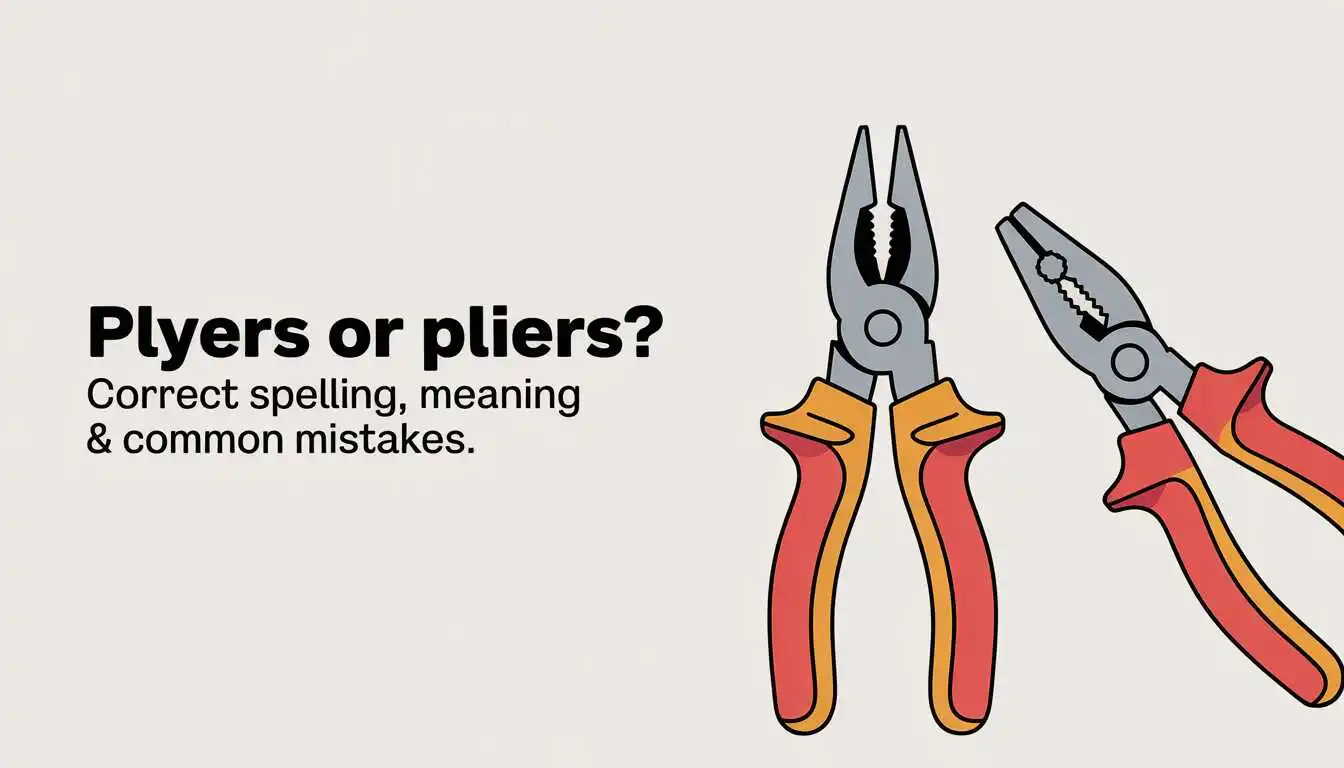
“Pliers” is the correct spelling. “Plyers” is a common misspelling caused by pronunciation confusion. The word “pliers” refers to a hand tool used for gripping, bending, or cutting materials. In formal writing, professional communication, and product listings, you should always use “pliers” to stay accurate and credible.
AI Overview Summary
- “Pliers” is the correct and standard spelling in English
- “Plyers” is incorrect and not recognized
- Confusion happens because both sound the same
- “Pliers” is always treated as a plural noun
- Using the wrong spelling can affect credibility and trust
Pliers vs Plyers — What’s the Difference?
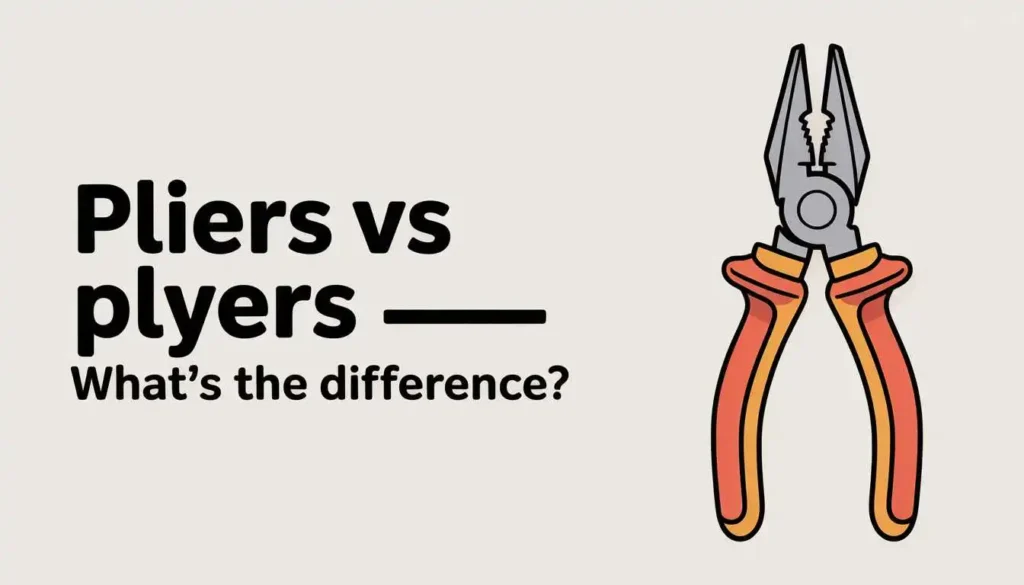
Here’s the thing… this isn’t really a “difference” question. It’s a correct vs incorrect situation.
Direct answer: “Pliers” is correct. “Plyers” is a spelling mistake.
Side-by-Side Comparison
| Word | Correct? | Meaning | Example | Acceptable Use |
|---|---|---|---|---|
| Pliers | ✔ Yes | A hand tool for gripping or cutting | “Pass me the pliers.” | Always |
| Plyers | ✘ No | No valid meaning | “I need plyers.” (incorrect) | Never (formal use) |
Most people miss this: Even though “plyers” looks logical, English doesn’t follow logic all the time. It follows history and usage.
What Are Pliers? Meaning, Definition, and Real Uses
Let’s not stop at spelling. You should also know what pliers actually are.
Direct answer: Pliers are handheld tools used for gripping, bending, twisting, or cutting wires and small objects.
Common Uses of Pliers
You’ll find pliers almost everywhere:
- Fixing electrical wires
- Holding small objects tightly
- Bending metal pieces
- Jewelry making
- Everyday DIY repairs
Types of Pliers (Quick Overview)
| Type | Use Case |
|---|---|
| Needle-nose pliers | Precision work, small spaces |
| Slip-joint pliers | Adjustable grip |
| Cutting pliers | Cutting wires |
| Linesman pliers | Electrical work |
Here’s what most people get wrong: They think “pliers” is just one tool. In reality, it’s a category of tools with different functions.
Why Do People Spell “Pliers” as “Plyers”?
This is where things get interesting.
Direct answer: People misspell “pliers” as “plyers” because both words sound exactly the same when spoken.
But that’s only part of the story.
The SPELL Framework (Why This Confusion Happens)
Let’s break it down using a simple model:
S — Sound mismatch “Pliers” and “plyers” sound identical.
P — Pattern assumption Your brain guesses spelling based on similar words like “flyers.”
E — Exposure bias You’ve probably seen “plyers” online somewhere.
L — Language irregularity English spelling is not consistent.
L — Learning gap No one explicitly taught you the correct form.
That’s the real reason. Not carelessness—just how your brain works.
Real-Life Example
Incorrect:
“I bought new plyers for my toolbox.”
Correct:
“I bought new pliers for my toolbox.”
Simple change. Big difference.
Is “Pliers” Singular or Plural?
This confuses a lot of people.
Direct answer: “Pliers” is always treated as a plural noun, even when referring to one tool.
You don’t say:
“A plier”
You say:
“A pair of pliers”
Similar Words That Work the Same Way
| Word | Example |
|---|---|
| Scissors | “A pair of scissors” |
| Glasses | “A pair of glasses” |
| Tongs | “A pair of tongs” |
Quick tip: If it has two parts working together, it’s often plural.
READ MORE >>> Exiting or Exciting: Meaning, Difference, and How to Use Them Correctly
Should You Ever Use “Plyers”?
Let’s be honest. You’ve probably seen people use it.
So… should you ever use it?
Direct answer: No, you should not use “plyers” in correct writing. It’s a mistake.
But there’s one exception worth knowing.
Real-World Insight
Sometimes, “plyers” appears in:
- Search queries
- Informal messages
- User-generated content
That doesn’t make it correct—it just means people make mistakes at scale.
Expert Tip
If you’re writing content:
- Always use “pliers”
- You can mention “plyers” once for clarification
- Don’t build your content around the wrong spelling
Clarity beats cleverness every time.
How Google Handles Misspellings Like “Plyers”
Direct Answer: Google usually recognizes “plyers” as a misspelling and automatically shows results for “pliers,” but it still tracks both queries separately.
Here’s what’s really happening behind the scenes…
When someone searches “plyers,” Google may show a “Did you mean: pliers” suggestion. But it doesn’t ignore the original query. It tries to understand the intent, not just the spelling.
Important insight: Even if Google corrects the word, it still uses your content relevance to decide rankings.
What this means for you:
- You should always use “pliers” as your main keyword
- You can mention “plyers” once or twice naturally
- Don’t build your content around incorrect spelling
Bottom line: Google is smart—but it still rewards correct and clear content.
Why People Search “Plyers” (Search Behavior Explained)
Direct Answer: People search “plyers” because they spell words based on sound rather than memorized spelling.
Here’s the thing…
Most users don’t sit and think about spelling rules. They type fast. They rely on what sounds right.
Common Reasons Behind This Search
- Fast typing on mobile devices
- Voice search converting speech into text
- Confusion from similar words like “flyers”
- Lack of formal grammar knowledge
Most people miss this: This isn’t a grammar issue—it’s a human behavior pattern.
Simple example:
- You hear: pliers
- Your brain writes: plyers
That’s normal. But it still needs correction.
Mixed Intent: It’s Not Just a Spelling Question
Direct Answer: The keyword “pliers or plyers” has three combined intents: spelling clarification, tool understanding, and search curiosity.
This is where most articles fall short.
They treat it as a simple spelling issue. But in reality, users are trying to solve multiple things at once:
The 2 Intent Layers
- Spelling Intent → “Which one is correct?”
- Meaning Intent → “What are pliers?”
Here’s the advantage: If your content answers all three, Google sees it as complete.
And complete content ranks higher.
Real-Life Use Cases of Pliers (Practical Context)
Direct Answer: Pliers are used in real-world tasks like electrical work, mechanical repairs, and crafting.
Let’s make this practical.
Real Scenarios
Electrician Uses pliers to cut and twist wires safely.
Mechanic Uses pliers to grip small parts in tight spaces.
Jewelry Maker Uses needle-nose pliers for precision bending.
DIY User (like you) Uses pliers to fix household items or hold objects firmly.
Why this matters: When you understand the tool, the word becomes easier to remember.
Why “Pliers” Is Officially Correct (Authority Layer)
Direct Answer: “Pliers” is the correct spelling because it is the standard form recognized in English language usage.
This isn’t just opinion—it’s based on:
- Established English vocabulary
- Long-term usage in writing and speech
- Consistency across professional and technical fields
Key insight: Language correctness is decided by usage over time, not logic.
That’s why:
- “Pliers” = accepted
- “Plyers” = rejected
Simple takeaway: If you want to be correct, follow standard usage—not assumptions.
Why This Small Question Matters (Psychology Layer)
Direct Answer: People search “pliers or plyers” because they want to avoid being wrong and maintain credibility.
Let’s be honest…
You didn’t search this just for fun.
You searched because:
- You weren’t 100% sure
- You didn’t want to make a mistake
- You wanted confirmation
That’s normal.
This is called a confidence query.
And once you know the answer, you feel:
- More certain
- More confident
- More professional
When This Spelling Mistake Can Cost You
Now let’s talk about something practical.
Direct answer: Using “plyers” instead of “pliers” can make you look unprofessional and reduce trust.
Mini Case Study
A small online seller listed a product as:
“Heavy-duty plyers for electrical work”
Result:
- Lower trust from buyers
- Fewer clicks
- Poor conversion rate
After fixing it to:
“Heavy-duty pliers for electrical work”
Result:
- Better engagement
- Improved credibility
- More sales
Same product. Different spelling. Different outcome.
Where It Matters Most
Be careful in these situations:
- Job applications
- Client emails
- Product listings
- Blog content
One small mistake can change how people see you.
Pliers vs Plyers — Quick Decision Guide
Still unsure? Use this:
Direct answer: Always choose “pliers” unless you’re intentionally referencing a misspelling.
Decision Table
| Situation | Use “pliers” | Use “plyers” | Recommendation |
|---|---|---|---|
| Formal writing | ✔ | ✘ | Always use pliers |
| Emails | ✔ | ✘ | Stay professional |
| Casual texting | ✔ | ✔ (rare) | Still better to use pliers |
| Product listings | ✔ | ✘ | Critical to use correct spelling |
Short version: When in doubt, choose pliers.
Common Mistakes and How to Avoid Them
Direct answer: Most spelling mistakes happen because people rely on sound instead of verified spelling.
Common Mistakes
- Writing based on pronunciation
- Copying incorrect spelling from others
- Assuming “plyers” follows word patterns
Expert Tips to Avoid Errors
- Double-check using a dictionary
- Use spell-check tools
- Learn common plural-only nouns
- Read your writing before publishing
Small habit. Big improvement.
Frequently Asked Questions
Because the pronunciation sounds like “plyers,” leading people to guess the spelling incorrectly.
Yes, it is always treated as a plural noun, even when referring to a single tool.
It can make your writing look unprofessional and reduce trust with readers or clients.
Yes. Even small mistakes can impact how people perceive your knowledge and attention to detail.
Because English has evolved from multiple languages, leading to irregular spelling patterns.
Even one spelling mistake can:
Make your resume look careless
Lower your chances instantly
Reality: People judge quickly. Spelling matters.
It is always treated as a plural noun.
They are used for gripping, bending, and cutting materials like wires.
Because English pronunciation doesn’t always match spelling, leading to confusion.
No, “plyers” is not a correct spelling in standard English.
Final Verdict: Pliers Is Always Correct
Let’s wrap this up clearly.
“Pliers” is the only correct spelling. “Plyers” is a mistake—simple as that.
But here’s the deeper takeaway…
This isn’t just about spelling. It’s about clarity, confidence, and credibility.
The words you choose shape how people see you. One small correction can make your writing sharper, cleaner, and more trustworthy.
So next time you hesitate…
You already know the answer.
It’s “pliers.” Always.