
Quick Answer
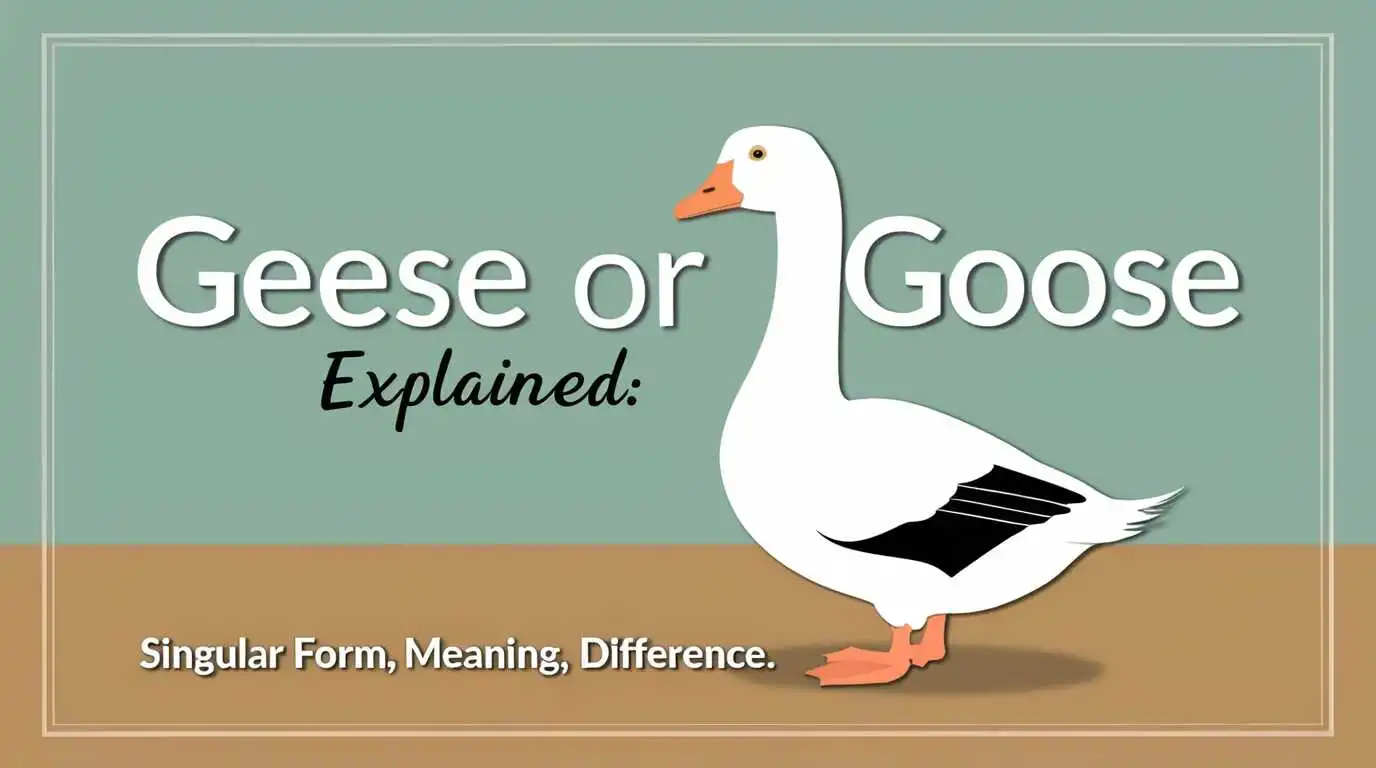
Goose is the singular form of the word, and geese is the plural form. The change is irregular, meaning it does not follow the standard rule of simply adding “-s.” Instead, the word changes internally due to old English vowel patterns. You use goose when referring to one bird and geese when referring to more than one.
AI Overview Summary
Goose and geese are irregular nouns in English grammar. Goose refers to a single bird, while geese refers to multiple birds. Unlike regular plural nouns that add “-s,” this word changes its internal vowel due to historical language evolution from Old English. This irregular pattern is shared with words like “foot → feet” and “tooth → teeth.”
Understanding Goose or Geese (Let’s Clear the Confusion First)
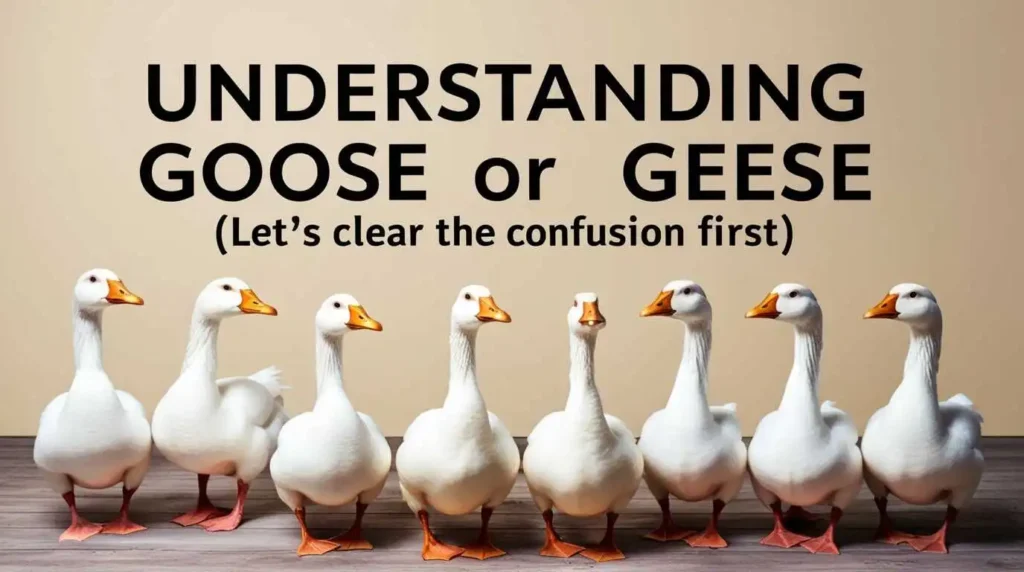
Let’s be honest—this is one of those grammar questions that seems simple but still confuses a lot of people.
You hear both words:
- goose
- geese
And you might think… which one is correct?
Here’s the thing: both are correct—but they are used in different situations.
One is singular. The other is plural.
Simple. But there’s more going on underneath.
What Is Goose in English Grammar?
Goose is the singular noun.
It refers to one large water bird commonly found near lakes, rivers, and wetlands.
In simple words:
If you see one bird, you call it a goose.
Example:
- A goose is walking across the field.
That’s it. One bird = goose.
But now things change when there’s more than one.
Goose Plural Form
The goose plural form is “geese.”
This is an irregular plural in English, meaning it does not follow the normal rule of adding “-s” or “-es” to make a word plural. Instead, the word changes its internal vowel.
Simple explanation:
- Goose = one bird (singular)
- Geese = more than one bird (plural)
Why “Geese” Instead of “Gooses”?
Here’s the thing: English has a group of old words where the plural form changes the vowel inside the word instead of adding a suffix.
So instead of:
- goose + s ❌ (incorrect)
English uses:
- goose → geese ✔ (correct form)
This comes from older English language patterns that still exist today.
Example Sentences
- A goose is swimming in the lake.
- The geese are flying south for winter.
Quick Rule to Remember
If you’re confused, remember this:
Goose becomes geese — no “s” added, just a vowel change.
This makes it easy to identify irregular plural nouns in English.
Quick Comparison Table
| Feature | Goose | Geese |
|---|---|---|
| Number | One | More than one |
| Type | Singular noun | Plural noun |
| Rule | Standard form | Irregular vowel change |
| Example | A goose is swimming | The geese are flying |
READ MORE >>> Meantime or Mean Time: The Difference, Correct Usage, and a 2-Second Rule to Never Get It Wrong
Goose vs Geese: The Real Difference You Should Remember
Let’s make this super clear.
- Goose = single bird
- Geese = group of birds
But here’s what most people miss…
It’s not just about number. It’s about a special grammar pattern hidden in English history.
You’re not just memorizing words—you’re learning a pattern system.
Why Does Goose Become Geese?
Now this is where things get interesting.
English didn’t always follow today’s rules.
A long time ago, in Old English, some words formed plurals by changing their internal vowel sounds instead of adding “-s.”
That’s why we have:
- goose → geese
- foot → feet
- tooth → teeth
So what’s happening here?
Instead of:
adding something to the word
English:
changes the inside of the word
This is called a vowel shift pattern.
Insight Most Learners Miss
Here’s what most people get wrong:
They try to apply modern grammar rules to historical words.
But irregular nouns like “geese” are not mistakes in English—they are linguistic leftovers from older forms of the language.
Once you see that pattern, it becomes much easier to remember.
Is “Gooses” Correct?
Short answer: No.
Long answer: it might sound logical, but it is grammatically incorrect in standard English.
English does NOT accept:
- gooses ❌
- geeses ❌
Instead, it keeps the irregular form:
- geese ✔
This is why English sometimes feels confusing. It doesn’t always follow rules consistently.
Geese singular form
This is a simple but commonly searched question.
The singular form of geese is:
goose
So the relationship works both ways:
- goose → geese
- geese → goose
Think of it like a reversible pair.
The Irregular Vowel Shift Pattern (A Hidden System)
Let’s go deeper than basic grammar.
There’s a hidden pattern behind words like goose → geese.
Pattern examples:
| Singular | Plural |
|---|---|
| goose | geese |
| foot | feet |
| tooth | teeth |
| man | men |
This is not random.
It follows a historical vowel change system in English.
Why this matters:
Once you recognize this pattern, you stop memorizing and start predicting grammar.
That’s a big shift in learning.
Context Matters: How Goose and Geese Are Used in Real Life
Grammar isn’t just theory. You actually use these words in daily life, writing, and speaking.
Example in nature:
- I saw a goose near the lake.
- The geese were flying south for winter.
Example in writing:
- One goose was injured.
- Several geese crossed the road.
Example in storytelling:
- A lonely goose stood by the shore.
- A flock of geese filled the sky.
The meaning changes instantly depending on number.
Mini Case Study: ESL Student Confusion
Let’s look at a real learning situation.
A student writing an essay about wildlife wrote:
“There were many gooses in the park.”
The teacher corrected it to:
“There were many geese in the park.”
What went wrong?
The student applied the regular plural rule (-s) to an irregular noun.
What fixed it?
Once the student learned this pattern:
- goose → geese
- foot → feet
They stopped making the mistake completely.
Key takeaway:
Understanding patterns is more powerful than memorizing rules.
What Is the Singular Form of Geese?
The singular form of geese is goose.
This is a simple one-to-one relationship in English grammar: when you are talking about one bird, you use goose, and when you are talking about more than one, you use geese. There is no separate or alternative singular form just the standard word goose.
Here’s the thing that confuses most learners: people expect a “-s” or “-es” pattern, but this word does not follow that rule. Instead, it uses an irregular plural system, where the word changes internally.
Simple breakdown:
- Goose = singular (one bird)
- Geese = plural (more than one bird)
Example in real life:
- I saw a goose near the lake.
- I saw many geese flying in the sky.
Expert Tip: How to Never Confuse Goose and Geese Again
Here’s a simple mental shortcut:
If the word feels like it belongs to an “older English pattern,” it will likely change its vowel instead of adding “-s.”
So instead of thinking:
- “Add s?”
Think:
- “Does this word change internally?”
If yes → it’s probably irregular like goose → geese.
Why English Uses Irregular Forms Like This
Let’s go slightly deeper without overcomplicating it.
English evolved from multiple languages, especially Old English and Germanic roots. During that evolution, some plural forms changed pronunciation rather than spelling rules.
Over time:
- pronunciation changes became spelling rules
- older patterns stayed frozen in modern English
That’s why we still say:
- geese instead of gooses
- feet instead of foots
It’s history hiding inside grammar.
Common Mistakes People Make
Let’s quickly clear confusion:
❌ Mistake 1:
Thinking “geese” can be singular
❌ Mistake 2:
Adding “-s” to all nouns automatically
❌ Mistake 3:
Forgetting vowel-change patterns
✔ Correct thinking:
Some words don’t follow normal rules—they follow historical patterns.
Quick Memory Trick
Here’s an easy way to remember:
“One goose, many geese—no extra S, just a vowel change.”
Short. Simple. Effective.
Final Thoughts
At first glance, goose or geese looks like a basic grammar question.
But when you look deeper, it’s actually a small window into how English evolved over centuries.
Here’s the real takeaway:
You’re not just learning vocabulary. You’re learning patterns.
Once you understand that “goose becomes geese” because of historical vowel shifts—not random rules—you stop guessing and start understanding.
And that’s where English finally starts making sense.