
Quick Answer
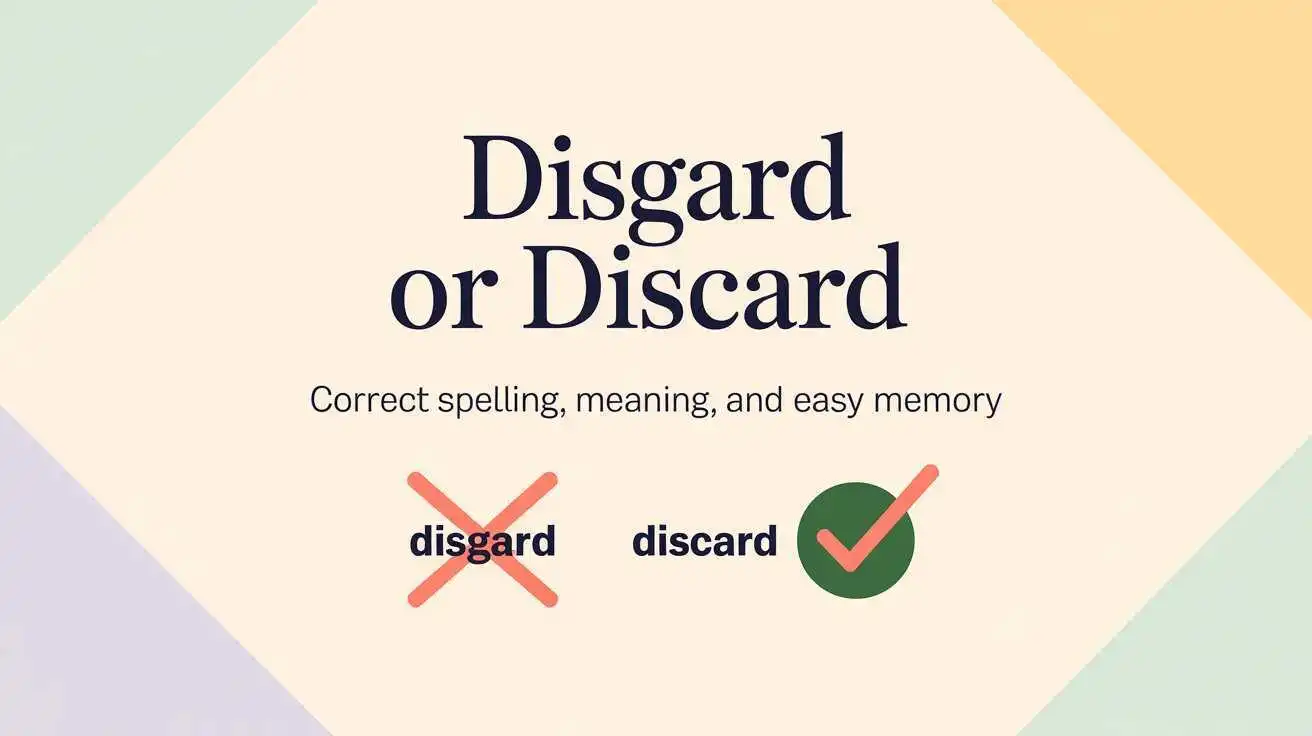
Discard is the correct spelling, while “disgard” is incorrect and not recognized in English. The word “discard” means to throw away or remove something that is no longer useful or needed. It is commonly used in everyday writing, exams, emails, and formal communication. Most people confuse it because of how it sounds when spoken quickly.
Introduction: Why This Small Spelling Confuses So Many People
If you’ve ever typed “disgard or discard”, you’re not alone. This is one of those English spelling doubts that looks simple on the surface but still trips up thousands of learners every day.
Here’s the thing… English spelling is not always phonetic. That means words often don’t sound exactly how they are written. And this is exactly where confusion starts.
At first glance, “disgard” feels correct. It sounds natural. It even looks like it could be a real English word. But in reality, only one version exists in standard English: discard.
Let’s break it down in a way that actually makes sense, not just memorization.
What Is the Correct Spelling: Disgard or Discard?
The correct spelling is discard.
“Disgard” is a common spelling mistake and is not found in standard English dictionaries.
Simple breakdown:
- Discard = correct
- Disgard = incorrect (not a word)
Most learners write “disgard” because they are guessing based on pronunciation, not spelling rules.
But English doesn’t always reward guessing.
What Does “Discard” Mean in English?
Now that we know the correct spelling, let’s understand what it actually means.
Discard means to get rid of something that is no longer useful, needed, or wanted.
It’s a verb used in everyday communication and formal writing.
Simple meaning:
To throw away or remove something.
Real-life examples:
- You discard old clothes you don’t wear anymore.
- A chef discards spoiled ingredients.
- You discard unnecessary files from your computer.
Notice something? It always involves removing something unwanted.
That’s the core idea.
Why Do People Write “Disgard” Instead of “Discard”?
This is where most explanations online stop too early. But the real reason is more interesting.
Here’s what most people miss…
The mistake is not random. It’s psychological.
1. Sound-based confusion
When spoken quickly, discard can sound like:
“dis-card” or even “dis-gard”
So the brain tries to “fix” it into something that looks familiar.
2. Pattern guessing
English learners often assume words follow a “logical pattern.” So they replace:
- “card” → “gard”
Because “gard” feels like it could exist (like “guard”).
But English doesn’t always follow predictable patterns.
3. ESL learning transfer
For non-native speakers, especially students learning English as a second language, spelling often gets influenced by pronunciation habits from their native language.
That’s why “disgard” appears more in casual writing or exams.
Pronunciation of “Discard” (And Why It Misleads Learners)
The correct pronunciation is:
/dɪsˈkɑːrd/
Let’s break it simply:
- dis = short and soft
- card = strong ending sound
Now here’s the tricky part: When spoken fast, “dis-card” can sound like “dis-gard.”
That illusion is the root of the problem.
So your ears mislead your fingers.
Discard vs Similar Words (Important Confusion Check)
Many learners don’t just confuse spelling—they also confuse meaning.
Let’s clear that up.
| Word | Meaning | Common Confusion |
|---|---|---|
| discard | throw away or remove | spelling mistake (“disgard”) |
| disregard | ignore something | meaning confusion |
| dispose | get rid of formally | usage overlap |
Here’s the key insight:
These words look similar but behave differently in real sentences.
READ MORE >>> Compare or Compair: Correct Spelling, Meaning, and How to Use It Properly in English
When Should You Use “Discard”?
You use discard when something is no longer useful or needed.
Real-life usage situations:
- Cleaning your room
- Removing outdated files
- Rejecting wrong answers in exams
- Throwing away spoiled food
Example sentences:
- Please discard expired documents.
- She discarded the broken chair.
- The system discards invalid entries automatically.
Short, simple, and practical.
That’s how the word actually lives in real English.
Why “Disgard” Feels Correct but Is Still Wrong
This is a fascinating part of the confusion.
Even though “disgard” is wrong, it still feels right to many learners.
Why?
Because the brain tries to match sound patterns with familiar English endings.
Words like:
- guard
- regard
- reward
All end in “-ard.”
So when people hear “discard,” they subconsciously assume it follows the same pattern.
But here’s the truth:
English spelling is historical, not logical.
That’s why guessing often fails.
Mini Case Study: How Students Commonly Make This Mistake
Let’s look at a real learning pattern.
A student writing an English essay in school wants to say:
“We should discard old habits.”
But they write:
“We should disgard old habits.”
What happens next?
- Teacher marks it wrong
- Student feels confused
- Correction shows “discard” is correct
After that, the student usually remembers it better once they learn the breakdown:
dis + card = discard
This is a classic ESL correction pattern seen in classrooms.
It’s not about intelligence. It’s about exposure and pattern recognition.
The DISCARD Memory Fix Method (Easy Way to Remember)
If you keep forgetting the spelling, here’s a simple mental trick.
D.I.S.C.A.R.D Method
- D → Drop wrong spelling ideas
- I → Identify correct spelling (discard)
- S → Sound it out: dis + card
- C → Correct usage in sentences
- A → Avoid “gard” assumption
- R → Repeat in writing
- D → Drill with examples
But the strongest memory trick is this:
Think of a playing card you throw away.
dis + card = discard
Simple. Visual. Easy to remember.
Real-Life Usage Matrix (How “Discard” Works in Different Contexts)
This word is more flexible than it looks.
| Context | How “discard” is used |
|---|---|
| School | discard wrong answers |
| Work | discard outdated reports |
| Technology | discard invalid data |
| Daily life | discard waste items |
| Decision-making | discard bad ideas |
This is why it’s a high-frequency word in English writing.
Expert Insight: The Hidden Reason This Confusion Persists
Most grammar guides miss this completely.
The confusion continues because:
- English pronunciation does not match spelling rules
- Learners rely on sound instead of structure
- Similar-looking words reinforce wrong patterns
Here’s the truth experts know:
Spelling mistakes like “disgard” are not knowledge problems. They are pattern recognition errors.
Once you see the pattern correctly, the mistake disappears permanently.
Why This Small Word Actually Matters
At first, this seems like a minor spelling issue.
But it matters more than people think.
Because words like “discard” appear in:
- academic writing
- job applications
- professional emails
- exams
A small spelling mistake can reduce clarity and confidence.
And confidence in writing affects everything else.
Final Thoughts: Discard Is Simple Once You See the Pattern
So let’s bring it all together.
“Disgard” is not a real word. It only exists as a mistake created by pronunciation confusion. The correct form is discard, and once you understand the structure—dis + card—it becomes much easier to remember.
Here’s the real takeaway:
English spelling is not about guessing. It’s about recognizing patterns.
And once you learn to see those patterns, words like this stop being confusing forever.
So the next time you hesitate between “disgard or discard,” you already know the answer.
It’s discard. Always.