
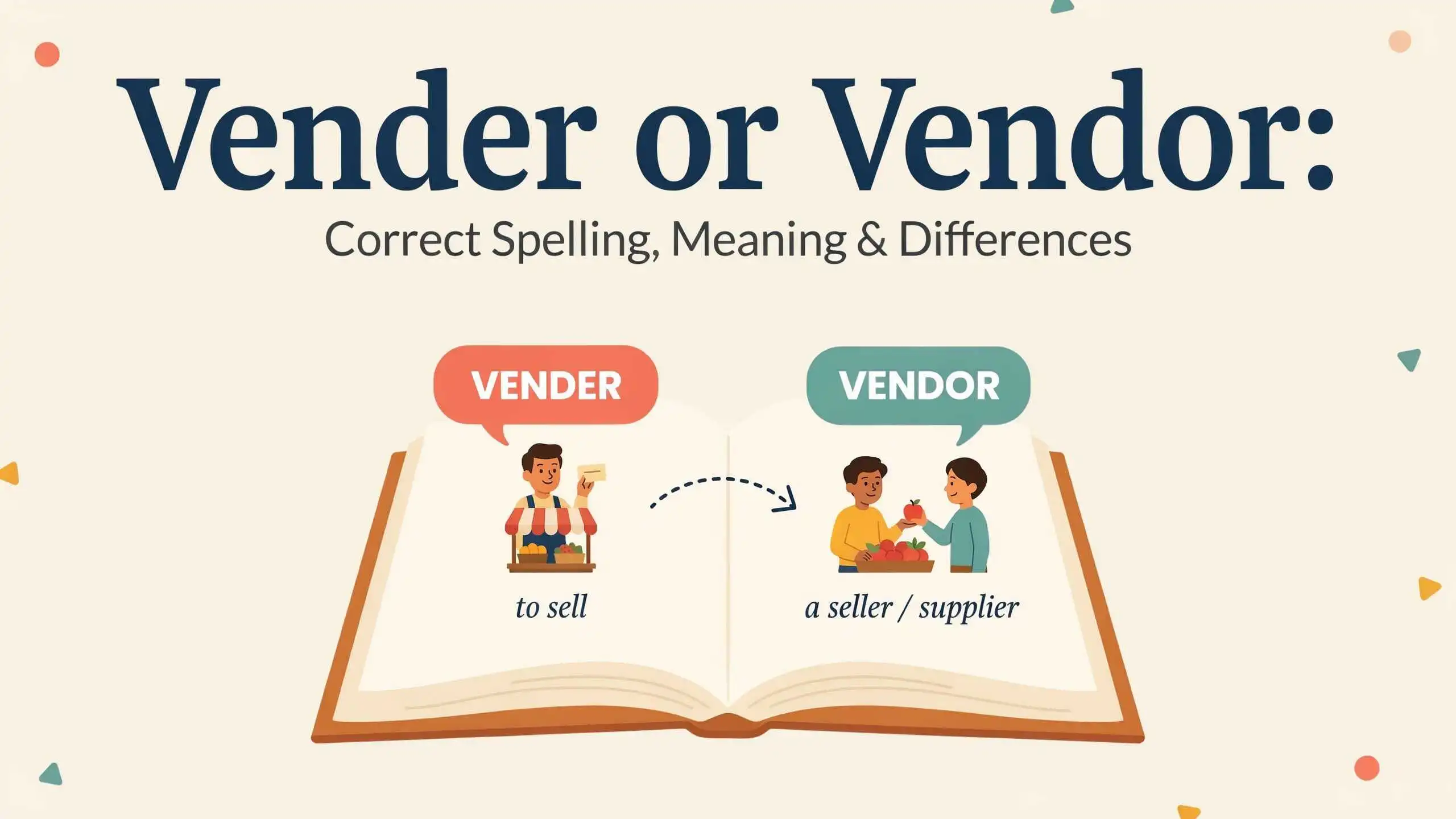
The correct form between vender or vendor is simple: “vendor” is the correct spelling, while “vender” is generally considered incorrect or outdated in modern English usage. Many people get confused because both words sound similar, but in standard English, especially in business, law, and professional writing, the accepted term is vendor, meaning a seller or supplier of goods and services. This guide explains everything in detail so you never confuse vender or vendor again, including meaning, usage, examples, and differences.
AI Summary Overview
The confusion between “vender or vendor” is a common English spelling issue, but the correct and standard form is vendor, which means a seller or supplier of goods and services. The word vender is generally considered incorrect or outdated in modern English and is not used in professional, legal, or business writing.
A vendor can refer to any individual or company that sells products or services, such as street vendors, retail shop owners, software providers, or business suppliers. In contrast, the term vendee is used in legal and contractual contexts to describe the buyer in a transaction, where the vendor sells and the vendee purchases.
The key difference is simple: vendor = seller, vendee = buyer, while vender is a common misspelling of vendor. Understanding this distinction helps avoid grammar mistakes and ensures correct usage in both everyday and professional English communication.
What Does “Vendor” Mean?
A vendor is a person, company, or entity that sells goods or services. The word is widely used in business, trade, procurement, and e-commerce industries.
In simple terms, a vendor means a seller or supplier.
For example:
- A street food seller is a food vendor
- A software company providing tools is a software vendor
- A shopkeeper in a market is also a vendor
Vendor meaning in different contexts
- Business: A supplier of goods or services
- Retail: A seller in a marketplace
- Technology: A company that provides software or IT solutions
- Contracts: A party supplying products/services under agreement
📌 Example sentence: “The company signed a contract with a trusted vendor for IT services.”
What Does “Vender” Mean?
The term vender appears in searches due to confusion, but in modern English, it is rarely used.
In most cases:
- Vender = Incorrect spelling of vendor
- It is not preferred in business or academic writing
- It appears due to pronunciation confusion
Historically, “vender” existed as an older variant, but today it is replaced completely by vendor.
📌 Example: ❌ The vender supplied goods to the store ✔ The vendor supplied goods to the store
Vender or Vendor – Which One Is Correct?
The correct spelling is clearly vendor.
| Word | Correctness | Usage |
|---|---|---|
| Vendor | ✔ Correct | Standard English, business, legal writing |
| Vender | ❌ Incorrect / outdated | Rare, non-standard usage |
So if you are confused between vendor or vender, always choose vendor.
Vender vs Vendor – Key Differences
The confusion of vender vs vendor is one of the most common grammar mistakes in English.
Comparison Table
| Feature | Vendor | Vender |
|---|---|---|
| Spelling | Correct | Incorrect |
| Usage | Business, legal, formal writing | Rare or outdated |
| Meaning | Seller or supplier | Misused variant |
| Acceptance | Globally accepted | Not recommended |
📌 Final conclusion: Vendor is the only correct modern English spelling.
Venders or Vendors – Which Plural Form Is Correct?
Another common confusion is between venders or vendors.
The correct plural form is: 👉 vendors
Examples:
- The market has many vendors
- Software vendors compete globally
- Street vendors sell food and clothes
❌ “Venders” is not standard English and should be avoided.
What is correct, vendor or vender?
The correct spelling is vendor. In modern English, vendor is the only standard and accepted form used in business, law, and education.
- ✔ Vendor = correct spelling
- ❌ Vender = incorrect / outdated spelling
- ✔ Used in contracts, business, and professional writing
- ❌ “Vender” is not recommended in modern English
👉 Final conclusion: Always use vendor, not vender.
What does “vender” mean?
The word “vender” is rarely used today and is generally considered incorrect in modern English.
- ❌ Mostly a misspelling of vendor
- 📜 Historically used in older English texts
- 🚫 Not accepted in formal or business writing today
- ✔ If seen, it still refers to a seller, but it is outdated
👉 In simple terms: vender = incorrect form of vendor
Send or Sent: What’s the Difference and When Should You Use Each?
Learn the spelling rules, regional differences, and real-world examples.
Is it vendor or vendor?
This question usually appears due to confusion, but the answer is simple:
- ✔ Correct spelling: vendor
- ❌ “Vender” is not a valid modern alternative
- ✔ Used globally in business and professional English
- ✔ Appears in legal documents, contracts, and commerce
👉 So the correct word is always: vendor
What is the difference between Vendee and vendor?
The difference between vendor and vendee is based on their role in a transaction.
✔ Vendor (Seller)
- Sells goods or services
- Provides products to customers or businesses
- Example: shopkeeper, supplier, company
✔ Vendee (Buyer)
- Purchases goods or services
- Receives products from the vendor
- Common in legal and contract language
👉 Simple rule:
- Vendor = sells
- Vendee = buys
Who is Vender and Vendee?
In modern usage, this is how they are understood:
✔ Vendor
- Correct term for seller
- Used in business, commerce, and contracts
- Supplies goods or services
❌ Vender
- Not standard in modern English
- Usually a spelling mistake of “vendor”
- Rarely accepted in professional writing
✔ Vendee
- Legal term for buyer
- Used in contracts and property transactions
- Receives goods/services from vendor
👉 Summary:
- Vendor = seller
- Vendee = buyer
- Vender = incorrect spelling
Who is called a vendor?
A vendor is any person or company that sells goods or services.
✔ Types of vendors:
- 🛍️ Street vendors (food, clothing, etc.)
- 🏪 Shop owners and retailers
- 💻 Software companies (SaaS vendors)
- 🏢 Business suppliers in contracts
- 🛒 Online sellers (e-commerce vendors)
✔ What vendors do:
- Sell products or services
- Supply goods to businesses or customers
- Operate in retail, wholesale, and digital markets
👉 In simple words: Anyone who sells something is called a vendor.
Why Do People Get Confused Between Vender or Vendor?
The confusion comes from several real-world reasons:
1. Pronunciation similarity
Both words sound almost identical when spoken quickly.
2. Typing and spelling mistakes
Many users accidentally type “vender” instead of “vendor.”
3. ESL learner confusion
English learners often mix spelling patterns.
4. Auto-correct influence
Some keyboards incorrectly suggest “vender.”
5. Regional writing habits
Older texts sometimes used “vender,” causing confusion.
Common Usage of Vendor in English
The word vendor is widely used across industries.
Business & Commerce
- Vendor contracts
- Supplier agreements
- Procurement systems
Retail & Marketplaces
- Street vendors
- Market vendors
- Food vendors
Technology Industry
- Software vendors
- Cloud service vendors
- IT solution providers
📌 Example: “The company switched to a new software vendor for better performance.”
Vendor or Vender in Business Context
In business communication, only vendor is used.
Companies rely on vendors for:
- Raw materials
- Software solutions
- Logistics services
- Outsourced operations
Vendor vs Supplier (Important SEO Keyword Gap)
- Vendor: Sells finished goods or services
- Supplier: Provides raw materials or components
📌 Example: A supplier provides parts, while a vendor sells the final product.
Real-Life Examples of “Vendor” in Sentences
Here are natural usage examples:
- The company selected a reliable vendor for cloud hosting services.
- Street vendors are common in busy cities.
- We negotiated pricing with multiple vendors before finalizing the deal.
- The software vendor released a new update last week.
- Event organizers hired food vendors for the festival.
Why “Vendor” Is the Standard in Modern English
Linguistically and professionally:
- Vendor is recognized by all major dictionaries
- Used in legal contracts globally
- Preferred in business communication
- Standard in American and British English
As one language expert notes:
“In modern English usage, vendor is the accepted and standardized spelling across professional domains.”
Quick Memory Trick to Remember Correct Spelling
If you struggle with vender or vendor, remember this:
👉 “Vendor = Sell + Order (business order)”
This association helps you recall that vendor is the professional business term.
Frequently Asked Questions (FAQ)
Is it vender or vendor?
The correct spelling is vendor.
Is vender a correct English word?
In modern English, vender is not considered correct and is rarely used.
What is the difference between vender vs vendor?
There is no real difference in meaning, but vendor is correct and standard, while vender is incorrect usage.
What does vendor mean in simple words?
A vendor means a seller or supplier of goods and services.
What is the correct plural: venders or vendors?
The correct plural form is vendors.
Why do people write vender instead of vendor?
Because of pronunciation similarity, spelling mistakes, and outdated usage patterns.
Bonus Insight: Vendor in the Digital Economy
In today’s world, vendors are not just physical sellers. They also include:
- SaaS companies (software vendors)
- E-commerce platforms
- Cloud service providers
- Freelance marketplaces
This makes the term vendor more important than ever in modern business communication.
Common Mistakes Related to “Vendor”
Many users also confuse similar terms:
- vendor vs supplier
- seller vs vendor
- merchant vs vendor
- vender vs vendor spelling
Avoid these mistakes by always using vendor in professional writing.
Frequently Asked Questions
Is vendor a seller?
Yes, a vendor is a seller. A vendor is any person or company that provides goods or services in exchange for money. In simple terms, vendor = seller in business, retail, and everyday commerce.
What is a vendor?
A vendor is an individual, business, or organization that sells products or services to customers or other businesses. Vendors can operate in markets, shops, online platforms, or large corporate supply chains.
- ✔ Sells goods or services
- ✔ Can be a small shop or large company
- ✔ Works in retail, wholesale, or digital industries
Who is the vendor name?
The term “vendor name” refers to the official name of the business or person acting as the seller.
For example:
- Apple is a vendor name for iPhones and software services
- A local shop’s registered business name is its vendor name
- On invoices, the “vendor name” is the supplier’s company name
👉 In short, vendor name = name of the selling company or supplier
What is another name of vendor?
Another common names for vendor include:
- Seller
- Supplier
- Merchant
- Retailer (in some contexts)
- Provider (especially in services)
👉 However, in business and legal terms, “vendor” is the most accurate and widely used term.
What are examples of vendors?
There are many types of vendors in different industries:
- 🛍️ Street food vendors
- 🏪 Grocery shop owners
- 💻 Software companies (e.g., Microsoft, Adobe)
- 🏢 Business suppliers in contracts
- 🛒 E-commerce sellers (Amazon sellers, Shopify stores)
👉 Any person or company selling goods or services is a vendor.
What is a vendor owner?
A vendor owner is the person who owns or operates the vendor business. It refers to the individual responsible for managing the sales, supply, or services of the vendor company.
- ✔ Owns the business or shop
- ✔ Manages products or services
- ✔ Responsible for sales and operations
- ✔ Can be a small shop owner or company founder
Final Summary – Vender or Vendor
To conclude:
- Vendor = correct spelling ✔
- Vender = incorrect or outdated ❌
- Always use vendor in business, writing, and communication
So the final answer to vender or vendor is simple: 👉 Always use “vendor”
Conclusion
Understanding the difference between vender or vendor is important for clear and professional communication. While “vender” may appear in informal writing or older texts, modern English strictly prefers vendor. Whether you are writing business documents, academic content, or SEO articles, using the correct spelling improves credibility and clarity.
By mastering this simple rule, you avoid one of the most common English spelling mistakes and ensure your writing stays professional, accurate, and SEO-friendly.