
Quick Answer
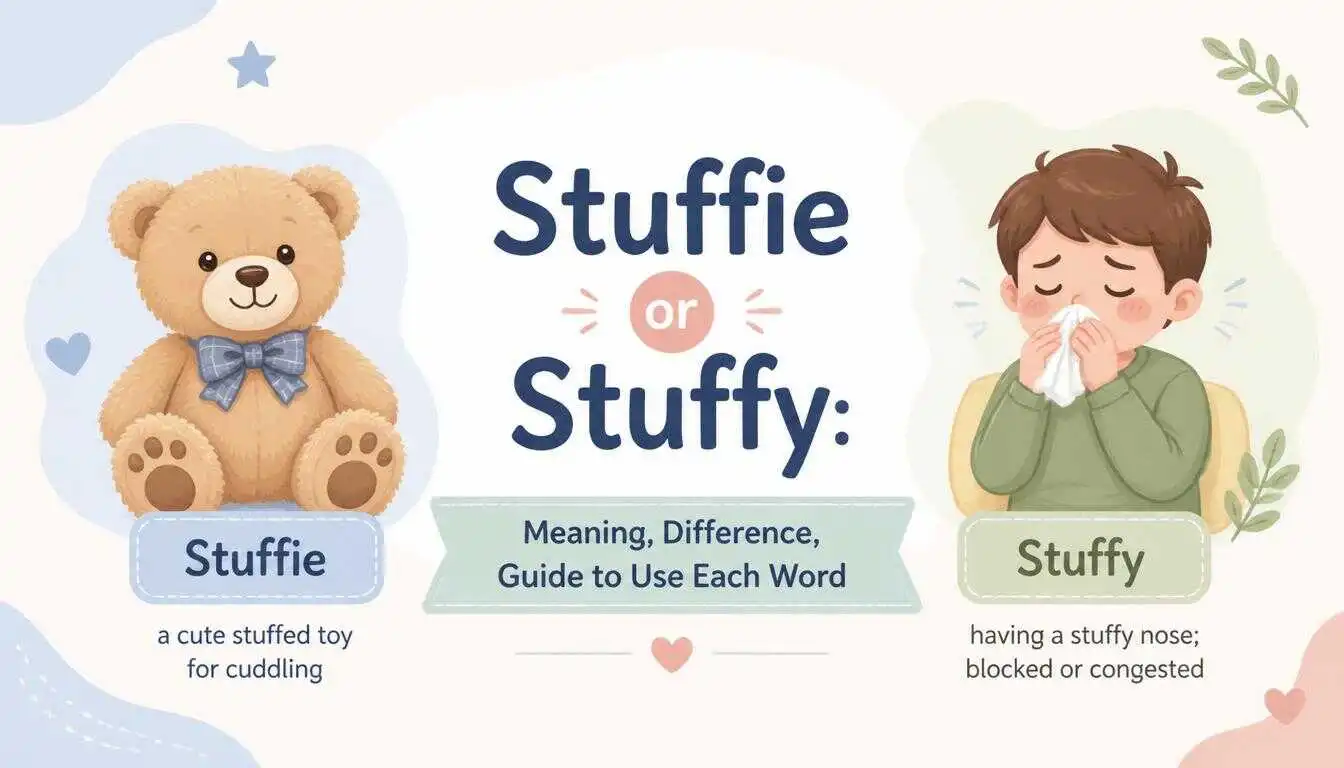
“Stuffie or Stuffy” “Stuffie” is an informal word for a plush toy or stuffed animal, often used by children or in casual speech. “Stuffy” is an adjective meaning congested, airless, or overly formal. They sound similar but are completely different in meaning, grammar, and usage, and should never be used interchangeably.
AI Overview Summary
“Stuffie” refers to a soft toy such as a stuffed animal, commonly used in informal or child-focused language. “Stuffy” is an adjective used to describe nasal congestion, tight or poorly ventilated spaces, or overly formal behavior. Despite similar pronunciation, the words are unrelated and serve different grammatical roles in English.
Stuffie or Stuffy: Why These Two Words Confuse So Many People
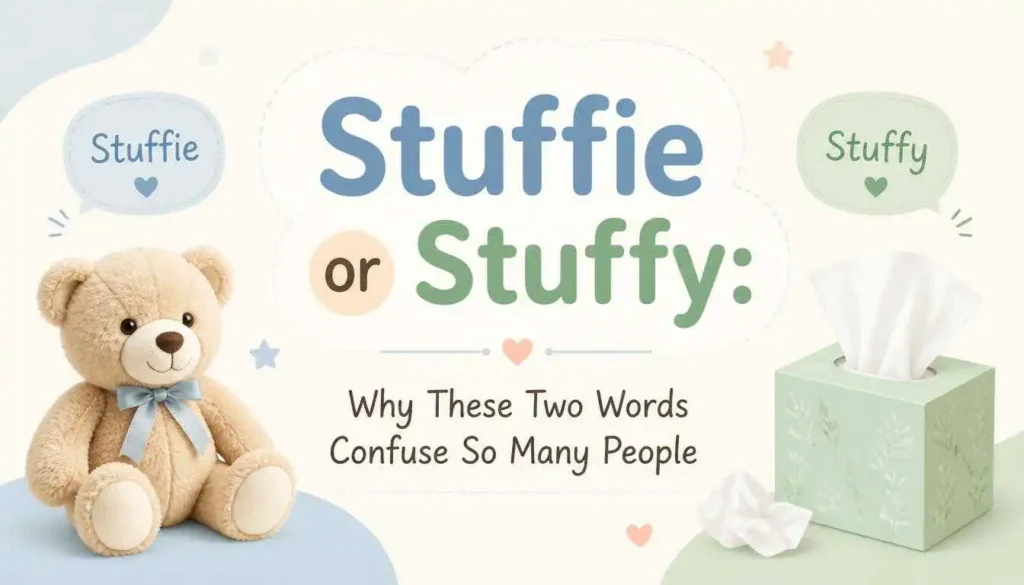
If you’ve ever stopped mid-sentence and wondered whether it’s stuffie or stuffy, you’re not alone.
Here’s the thing… these two words sound almost identical, but they live in completely different worlds of meaning. One is soft, cute, and tied to childhood comfort. The other is about discomfort, congestion, or rigid behavior.
And that similarity? It tricks people all the time.
Most people don’t confuse them because they don’t know English. They confuse them because English sometimes plays unfair games with sound-alike words.
Let’s clear it up properly.
What Does Stuffie or Stuffy Mean?
At a basic level, the confusion comes from pronunciation—not meaning.
You are actually dealing with two separate words:
- Stuffie → a noun (a toy)
- Stuffy → an adjective (a condition or feeling)
That’s it. Simple structure. Very different usage.
But let’s go deeper so you never confuse them again.
Stuffie Meaning (A Soft Toy You Can Hug)
A stuffie is an informal word for a stuffed animal or plush toy.
Think teddy bears, bunnies, or any soft toy kids sleep with, carry around, or treat like a friend.
Direct explanation:
A “stuffie” is a soft, cuddly toy filled with stuffing material used for comfort or play.
Real-life examples:
- “She never travels without her favorite stuffie.”
- “The child lined up all his stuffies on the bed.”
Here’s what most people miss…
The word “stuffie” is not really formal English. It became popular through child speech and parenting culture, especially in online communities and daycare language. Kids naturally shorten “stuffed animal” into something easier and more affectionate: stuffie.
That emotional softness is exactly why the word stuck.
Stuffy Meaning (Not a Toy at All)
Now let’s switch completely.
Stuffy is an adjective. It describes something uncomfortable or overly rigid.
Direct explanation:
“Stuffy” means lacking fresh air, feeling congested, or behaving in an overly formal or restricted way.
Real-life examples:
- “The room feels stuffy after the windows were closed.”
- “I have a stuffy nose during allergy season.”
- “That meeting felt very stuffy and formal.”
Notice something important?
Nothing here is playful or soft. This word is all about pressure, restriction, or discomfort.
That emotional difference is key to remembering it.
Is It Stuffy or Stuffie?
This is where most confusion happens.
Let’s settle it clearly:
Simple rule:
- If you can hold it or hug it → stuffie
- If it describes a feeling, space, or condition → stuffy
Comparison Table
| Word | Type | Meaning | Example |
|---|---|---|---|
| Stuffie | Noun | Plush toy / stuffed animal | “My stuffie sleeps with me.” |
| Stuffy | Adjective | Congested, airless, formal | “I have a stuffy nose.” |
If you remember only one thing, remember this:
Stuffie = object. Stuffy = condition.
Runny or Stuffy Nose: What’s the Difference?
Now let’s connect this to something very practical—health.
People often search “runny or stuffy nose” when they’re trying to understand symptoms.
Direct answer:
A runny nose produces mucus that flows outward, while a stuffy nose is blocked inside due to swelling or congestion.
Simple breakdown:
- Runny nose → leaking mucus
- Stuffy nose → blocked airflow
Real-life example:
During a cold, you might have both:
- Your nose runs in the morning
- But feels stuffy at night
That’s because inflammation shifts throughout the day.
READ MORE >>> Pricy or Pricey: Meaning, Correct Spelling, and Which One You Should Use
Stuffy Nose Humidifier or Dehumidifier: Which One Helps?
This is one of the most practical confusion points people search.
Direct answer:
A humidifier is usually better for a stuffy nose because it adds moisture to dry air and helps loosen congestion. A dehumidifier is used when air is too humid and may worsen allergies or mold-related symptoms.
When a humidifier helps most:
- Dry winter air
- Cold-related congestion
- Irritated nasal passages
When a dehumidifier helps:
- Humid climates
- Mold-triggered allergies
- Damp indoor air
Simple memory trick:
- Dry nose → add moisture (humidifier)
- Wet/humid air → remove moisture (dehumidifier)
Why “Stuffie” and “Stuffy” Get Mixed Up
At first glance, this looks like a spelling mistake issue.
But it’s not.
It’s actually a sound-based confusion problem.
Both words:
- start with “stuff”
- have soft endings
- are easy to mishear in speech
But they evolved from completely different roots.
Important insight:
Most language confusion happens not because words are similar in meaning—but because they are similar in sound but opposite in function.
And this is exactly what happens here.
The Word Split Rule (Simple Framework You Can Use)
Let’s make this easier with a mental model.
The Word Split Rule
This is a simple way to avoid confusion:
Step 1: Ask “Is it a thing or a description?”
- Thing = noun → stuffie
- Description = adjective → stuffy
# 2: Ask “Can I touch it?”
- Yes → stuffie
- No → stuffy
# 3: Ask “Does it describe a feeling or condition?”
- Yes → stuffy
- No → stuffie
This works surprisingly well in real life.
Most people stop confusing the words once they apply this mental filter.
Emotional Meaning Difference (Most People Miss This)
Here’s something interesting.
These two words don’t just differ in grammar—they differ in emotion.
Stuffie feels:
- warm
- safe
- comforting
- nostalgic
Stuffy feels:
- tight
- uncomfortable
- restrictive
- irritated
That emotional contrast is why your brain separates them once you understand them.
One feels like childhood comfort.
The other feels like needing fresh air immediately.
Mini Case Study: How Parents Naturally Learn “Stuffie”
Let’s look at a real-life situation.
A parent hears their toddler at daycare saying:
“I want my stuffie.”
At first, the parent assumes it’s baby talk.
But over time, they notice:
- teachers also use it
- other children use it
- parenting communities online use it
So the word becomes normalized.
Now here’s the interesting part…
That same parent later searches:
“Is it stuffie or stuffed animal?”
This shows how language adoption works in real life:
- children introduce the term
- adults adopt it
- digital culture reinforces it
Meanwhile, “stuffy” stays in medical and formal language contexts.
Two completely separate language paths.
READ MORE >>> Leary or Leery: Meaning, Definition, and Correct Usage Explained (2026 Guide)
Common Mistakes People Make
Let’s clear these up quickly.
Mistake 1:
“I have a stuffie nose.”
❌ Wrong
Correct:
“I have a stuffy nose.”
Mistake 2:
“Her stuffy is on the bed.”
❌ Wrong
Correct:
“Her stuffie is on the bed.”
Mistake 3:
Using “stuffie” in formal writing
❌ Not appropriate
Use:
- stuffed animal
- plush toy
Expert Usage Tips (Simple but Powerful)
If you want to never confuse these again, follow this:
- Use stuffie only when talking about toys, childhood, or casual speech
- Use stuffy when describing air, health, or personality tone
- Replace “stuffie” with “stuffed animal” in formal writing
- Think: comfort object vs condition word
That small shift makes everything clearer.
Frequently Asked Questions
Yes, but it is mostly used in informal or playful contexts, especially when talking about toys.
A stuffy nose is nasal congestion that blocks airflow due to inflammation or mucus buildup.
It can describe someone overly formal, rigid, or lacking flexibility in behavior.
Yes, but it is informal. It is widely used in casual speech to mean a stuffed animal or plush toy.
Both are correct words, but they are not interchangeable. Stuffie is a toy, and stuffy describes a condition or atmosphere.
Conclusion
So, here’s the simple truth behind stuffie or stuffy:
They only sound similar but they live in completely different worlds.
One belongs to comfort, childhood, and soft toys you can hug without thinking.
The other belongs to congestion, discomfort, and situations where you immediately want fresh air.
Once you see the difference clearly, you’ll never mix them up again.
And honestly, that’s the beauty of English—two nearly identical sounds, carrying two completely opposite experiences of life.