
If you’ve ever typed stear vs steer, you’re not alone. This is one of those small English confusions that trips up even native speakers. It looks simple, but it causes a surprising amount of doubt—especially when you’re writing something important and don’t want to look careless.
Here’s the thing: the confusion isn’t about intelligence. It’s about how English sounds versus how it’s spelled.
Let’s clear it up properly.
Quick Answer
Steer is the correct spelling and means to guide, control, or direct something, like a vehicle or decision. Stear is a common misspelling and has no recognized meaning in English. The confusion happens because both words sound identical when spoken, but only “steer” follows correct English spelling rules.
AI Overview Summary
Steer is the correct English word used for guiding or controlling direction, such as steering a car or steering a situation. “Stear” is not a valid English word and is considered a spelling error. The confusion exists because both words are pronounced the same, but only “steer” is accepted in standard English usage.
What Is the Difference Between Steer and Stear?
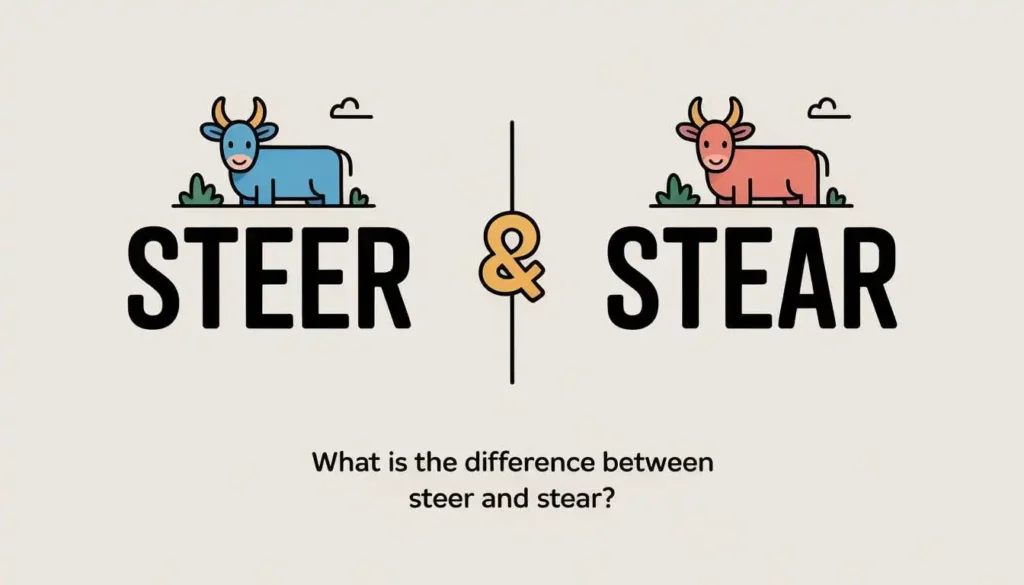
Let’s make this simple.
- Steer = correct word
- Stear = incorrect spelling
That’s it.
But most people don’t make this mistake because they “don’t know English.” They make it because English spelling doesn’t always match how words sound.
Here’s what matters:
Steer is always correct in formal, academic, and professional writing. Stear should never be used.
Quick Comparison Table
| Word | Meaning | Status | Usage |
|---|---|---|---|
| Steer | To guide or control direction | Correct | Common English word |
| Stear | No meaning in standard English | Incorrect | Spelling mistake |
What Does “Steer” Mean in English?
Here’s where things get more interesting.
Steer means to guide, direct, or control movement.
But it’s not just about driving.
1. Physical Meaning
You use it when controlling something that moves.
- Steer a car
- Steer a bicycle
- Steer a ship
Think of it as direction control in the real world.
2. Figurative Meaning
This is where most people miss the depth.
You can also “steer” situations.
- Steer a conversation
- Steer a project
- Steer a decision
So it’s not just physical. It’s also about influence and direction in life.
READ MORE >>> Protesters vs Protestors: Which Spelling Is Correct and Why “Protesters” Became Standard
Steer vs Stear: Why This Confusion Happens So Often
The confusion between steer vs stear happens mainly because English spelling does not always match pronunciation.
Here’s what most people miss:
- Both words sound identical: /stɪr/
- The brain tries to guess spelling based on sound
- English has multiple vowel patterns like “ee” and “ea”
- Fast typing and autocorrect mistakes reinforce the wrong form
So when someone writes “stear,” it is usually not lack of knowledge—it is sound-based spelling confusion.
👉 Simple rule to remember:
Steer = correct (double “e” = control direction)
Stear = always wrong
Why Do People Write “Stear” Instead of “Steer”?
This is the real question behind the keyword stear vs steer.
And the answer is surprisingly human.
1. Sound confusion
Both words sound identical:
/stɪr/
So your brain doesn’t hear the spelling difference.
2. Vowel guessing
English has tricky vowel patterns:
- “ee” as in see
- “ea” as in lead
So people randomly pick one.
3. Fast typing behavior
Most errors happen when:
- typing quickly
- using mobile keyboards
- relying on autocorrect
And here’s the twist: Autocorrect sometimes doesn’t explain the correction, so the mistake never gets learned properly.
Mini Case Study: A Real-World Mistake That Looks Small (But Isn’t)
A freelance writer once used “stear clear of this issue” in a blog post.
Nothing dramatic, right?
But here’s what happened:
- The article was submitted to a client
- The client flagged it immediately
- The writer lost credibility for “attention to detail”
Now here’s the important lesson:
Even small spelling mistakes like stear instead of steer can affect trust in professional writing.
Not because people are harsh—but because writing signals accuracy.
Why This Confusion Happens in Your Brain
Most explanations stop at “it’s a typo.”
But there’s something deeper going on.
Your brain doesn’t store spelling as letters first. It stores sound patterns first, then tries to map them into written form.
So when you hear “steer,” your brain asks:
“Do I write stear or steer?”
And it guesses based on:
- familiar word patterns
- common vowel combinations
- past typing habits
That’s why even good English speakers slip up.
The Simple Memory Rule (Easy Fix)
Here’s a quick trick you can actually use.
The Double “E” Rule
- Steer = double “E” = control direction
- “EE” often signals long vowel sound in English
So whenever you think of guiding or controlling something, remember:
You are “steering” with double control (double E)
And:
“Stear” is just a visual trap.
Is “Steer Clear” Related?
Yes—and this is where usage becomes interesting.
Steer clear means:
To avoid something or move away from danger.
Example:
- Steer clear of toxic people.
- Steer clear of bad decisions.
It uses “steer” in a metaphorical sense, meaning you are guiding yourself away from something.
Common Mistakes People Make
Here are the most frequent errors:
- Writing stear clear instead of steer clear
- Confusing “steer” with “stir”
- Overthinking vowel spelling
- Relying only on pronunciation
Most people don’t realize:
English spelling is not always phonetic.
That’s the core issue.
Expert Insight: Why English Feels Confusing
Here’s what most learners don’t get told:
English spelling evolved from multiple languages—Latin, Germanic, French—and that’s why vowel consistency is weak.
So words like:
- see
- meet
- steer
follow patterns that are not always predictable.
That’s why “stear vs steer” confusion is completely normal, especially for learners and fast typists.
When Does This Mistake Matter Most?
Let’s be real.
Not every typo is equal.
High-risk situations:
- job applications
- academic writing
- business emails
- client communication
Low-risk situations:
- texting friends
- casual chats
- social media comments
But here’s the truth: Even in casual writing, correct spelling builds credibility over time.
Small details create big impressions.
Why “Steer” Always Wins in Search Results
If you look at how content ranks, pages that explain this keyword well always do a few things right:
- Give a direct answer early
- Explain confusion clearly
- Provide examples
- Keep structure simple
- Avoid unnecessary complexity
Google prefers clarity over depth for this query.
Why?
Because users don’t want theory.
They want certainty.
Real-Life Example You Can Relate To
Imagine you’re writing a message:
“Let’s stear clear of this problem.”
It looks fine at a glance.
But if someone notices it, the perception changes instantly:
- Did you rush this?
- Is your writing reliable?
Now compare:
“Let’s steer clear of this problem.”
Same meaning. Different trust level.
That’s the power of one letter.
Frequently Asked Questions: Steer vs Stear
The word “steer” comes from Old English and originally meant “to guide or direct.”
That meaning is still used today:
To steer a car = control direction
To steer a conversation = guide discussion
To steer decisions = influence choices
👉 The idea is always the same: guiding something in a direction.
The correct spelling is steering.
✔ steering = correct
✘ stearing = incorrect
“Steering” refers to the act of controlling direction.
👉 Example:
The steering wheel controls the car’s movement.
The correct spelling is:
👉 S T E E R
It has two “e” letters in the middle.
Example:
You steer a car using the steering wheel.
Learners practice how to steer in driving school.
There is no word called “stear” in standard English.
If you see it online, it is almost always:
a typing mistake
a spelling error
or confusion with “steer”
👉 The correct word you are looking for is “steer”, which means to guide or control direction.
The difference is very simple:
Steer = correct word meaning to guide or control direction
Stear = incorrect spelling with no official meaning
The confusion happens because both sound the same when spoken, but only “steer” is grammatically correct in English.
👉 Example: ✔ She learned how to steer the car safely. ✘ She learned how to stear the car safely.
You steer a car, not stear a car. “Steer” means to control the direction of a vehicle using the steering wheel. “Stear” is just a spelling mistake and has no meaning in English.
👉 In simple terms: If you are driving and controlling direction, you are steering the car.
Final Thoughts
The difference between stear vs steer is small on paper, but important in practice.
Here’s the simple truth:
- Steer is correct, always.
- Stear is just a spelling mistake your brain makes because English sounds don’t match spelling rules perfectly.
But once you understand why the mistake happens—not just what it is—you stop repeating it.
And that’s the real win here.
Because English isn’t about memorizing words.
It’s about recognizing patterns.
And now you’ve got the pattern right.