
QUICK ANSWER BOX
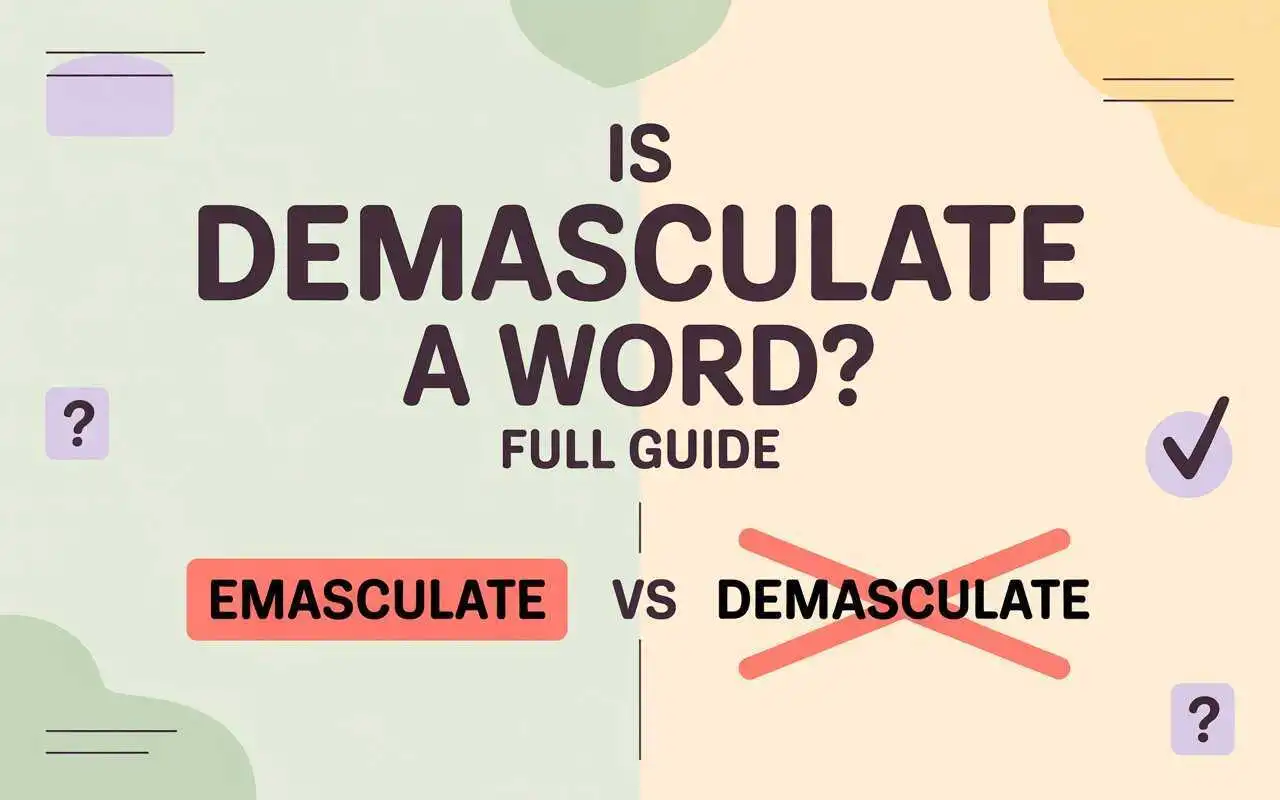
Emasculate is a real English word meaning to weaken or deprive someone of strength or masculinity, while “demasculate” is not a standard English word. It is commonly used incorrectly due to confusion with the prefix “de-”. The correct term in all formal writing is emasculate. Emasculate vs Demasculate
AI OVERVIEW SUMMARY BLOCK
The confusion between “emasculate” and “demasculate” comes from modern internet usage and misunderstanding of word structure. “Emasculate” is the correct dictionary term used in English to describe weakening, removing strength, or reducing effectiveness. “Demasculate” is not recognized in standard English dictionaries. It appears in informal speech or online discussions but is grammatically incorrect. Understanding this distinction helps improve writing accuracy, grammar clarity, and vocabulary precision.
Emasculate vs Demasculate: What’s the Difference?
The English language often confuses learners with similar-looking words. One of the most commonly misunderstood comparisons is emasculate vs demasculate. While they sound related, only one is correct in standard English usage.
Let’s break it down clearly, simply, and with real examples so you never confuse them again.
What Does “Emasculate” Mean?
Emasculate is a real English verb.
It means:
- To weaken someone physically or emotionally
- To reduce power, strength, or confidence
- To deprive someone of masculine traits (context-dependent usage)
Example sentences:
- The criticism made him feel emasculated.
- The leader’s authority was gradually emasculated.
👉 In modern usage, it is often used metaphorically, not literally.
Is “Demasculate” a Real Word?
No. “Demasculate” is not a standard English word.
It is:
- Not found in major dictionaries
- Not accepted in formal grammar
- A result of incorrect word formation
Why people use it:
- Confusion with the prefix “de-” (meaning removal or reversal)
- Internet slang and informal writing
- Mishearing or misspelling “emasculate”
👉 Important: In academic or professional writing, avoid it completely.
Emasculate vs Demasculate (Key Differences)
| Feature | Emasculate | Demasculate |
|---|---|---|
| Dictionary Validity | Yes | No |
| Grammar Status | Correct | Incorrect |
| Usage | Formal + Informal | Informal error |
| Meaning | To weaken | No standard meaning |
| Acceptance | High | None |
Why Do People Confuse These Words?
This confusion happens due to language psychology and structure patterns.
Main reasons:
- The prefix “de-” usually means removal (like deactivate, decode)
- People assume “demasculate” should mean “reverse masculinity”
- Social media spreads incorrect word usage quickly
- Phonetic similarity between both words
👉 This is a classic case of false word formation in modern English.
Origin of the Word “Emasculate” (Etymology)
The word “emasculate” comes from Latin roots:
- “e-” meaning “out of” or “removal”
- “masculus” meaning “male” or “masculine”
Originally, the word was used in a literal sense meaning removing male traits or strength. Over time, English usage evolved, and now it is mostly used metaphorically, meaning:
- to weaken someone
- to reduce confidence or power
- to make something less effective
👉 Modern English rarely uses it in a biological sense anymore.
Emasculate vs Castrate vs Demasculate (Advanced Comparison)
These three terms are often confused, but they are very different:
✔ Emasculate
- Mostly metaphorical
- Means: weaken power, confidence, or authority
- Example: “The policy emasculated his influence.”
✔ Castrate
- Literal medical/biological meaning
- Means: removal of reproductive organs
- Very strong and literal term
❌ Demasculate
- Not a real English word
- Incorrect formation
- Used only in informal internet mistakes
👉 Key takeaway: Only emasculate is correct in standard English usage.
How “Emasculate” Is Used in Modern English (2026 Usage Trend)
In modern communication (especially online), “emasculate” is used more in:
- social commentary
- political discussions
- relationship discussions
- emotional expression
However, modern writing trends show:
- less literal usage
- more metaphorical meaning (confidence, power, identity)
👉 Example: Instead of physical meaning, it now often refers to emotional or psychological weakening.
Is “Emasculate” Offensive or Sensitive?
The word itself is not offensive in grammar, but context matters heavily.
It can feel sensitive when:
- used in gender-related arguments
- used to describe masculinity in a negative emotional way
It is neutral when:
- used in formal writing
- used in structural/organizational context
- used metaphorically (power, authority, systems)
👉 So the tone decides whether it feels offensive or not.
Common Misinterpretations in Grammar Learning
Many learners misunderstand this word because:
- they assume “de-” means reversal (like deactivate → active)
- they try to logically “fix” the word into demasculate
- they overapply English word-building rules
👉 But English is not always logically constructed — many words are historical, not rule-based inventions.
Linguistic Structure of “Emasculate”
Breakdown:
- Prefix: e- (out/removal)
- Root: mascul (male/strength)
- Suffix: -ate (verb form)
👉 Combined meaning: “To remove strength or masculine quality”
This structure helps understand why the word exists historically, even if modern usage is metaphorical.
When NOT to Use “Emasculate”
Avoid using the word when:
- you mean simple “improve” or “change”
- the context is neutral technical writing
- you are unsure about emotional sensitivity
👉 Better alternatives depending on context:
- weaken
- reduce effectiveness
- limit authority
- undermine (contextual)
Summary Table (Quick Grammar Fix Guide)
| Word | Status | Meaning | Usage Note |
|---|---|---|---|
| Emasculate | Correct | Weaken or reduce strength | Formal + informal |
| Castrate | Correct (literal) | Physical removal of organs | Medical/literal context |
| Demasculate | Incorrect | No standard meaning | Avoid completely |
Correct Usage of “Emasculate” (With Examples)
Understanding correct usage helps improve grammar accuracy.
Examples:
- His argument was emasculated during the debate.
- The system was emasculated by constant policy changes.
- She felt emotionally emasculated by the criticism.
Opposite of Emasculate
The opposite depends on context:
Common antonyms:
- Strengthen
- Empower
- Reinforce
- Enable
👉 There is no single perfect antonym because “emasculate” is context-based.
READ MORE >>> Bosses, Boss’s, or Boss’? The Simple Grammar Rule You’re Probably Using Wrong
Emotional & Contextual Meaning
In modern language, “emasculate” is often used metaphorically:
- Emotional weakening
- Loss of confidence
- Social or psychological power imbalance
⚠️ Note: It can be sensitive if used in gender-related discussions, so context matters.
Common Mistakes People Make
Mistake 1:
Using “demasculate” in writing ✔ Correct: emasculate
Mistake 2:
Thinking it only refers to masculinity ✔ It also means general weakening
Mistake 3:
Using it literally instead of metaphorically
Mini Case Study (Real-World Usage Confusion)
On social media platforms, users often write:
“He was demasculated by society.”
This is grammatically incorrect.
Correct version:
“He was emasculated by society.”
👉 This shows how internet language evolution spreads incorrect forms.
Expert Tip (Grammar Insight)
A simple way to remember:
👉 If you see “emasculate,” it is ALWAYS the correct form 👉 “Demasculate” = internet error, not English grammar
Think of it like:
- “Irregular invention” (not accepted in formal language systems)
FAQs
Because of confusion with the prefix “de-” and internet usage errors.
Strengthen, empower, or reinforce depending on context.
Emasculate is the correct and standard English term.
No, it is not a recognized English word.
It means to weaken or reduce strength, power, or effectiveness.
Final Conclusion
The difference between emasculate and demasculate is simple but important.
- Emasculate = correct English word
- Demasculate = incorrect formation
Understanding this distinction improves your grammar, writing clarity, and vocabulary accuracy. In formal communication, always use “emasculate” and avoid the incorrect variation.