
Introduction
Undecisive or indecisive is a common English spelling confusion, but the correct word is “indecisive.” The word “undecisive” is widely used in informal writing and search queries, but it is not considered standard English in dictionaries.
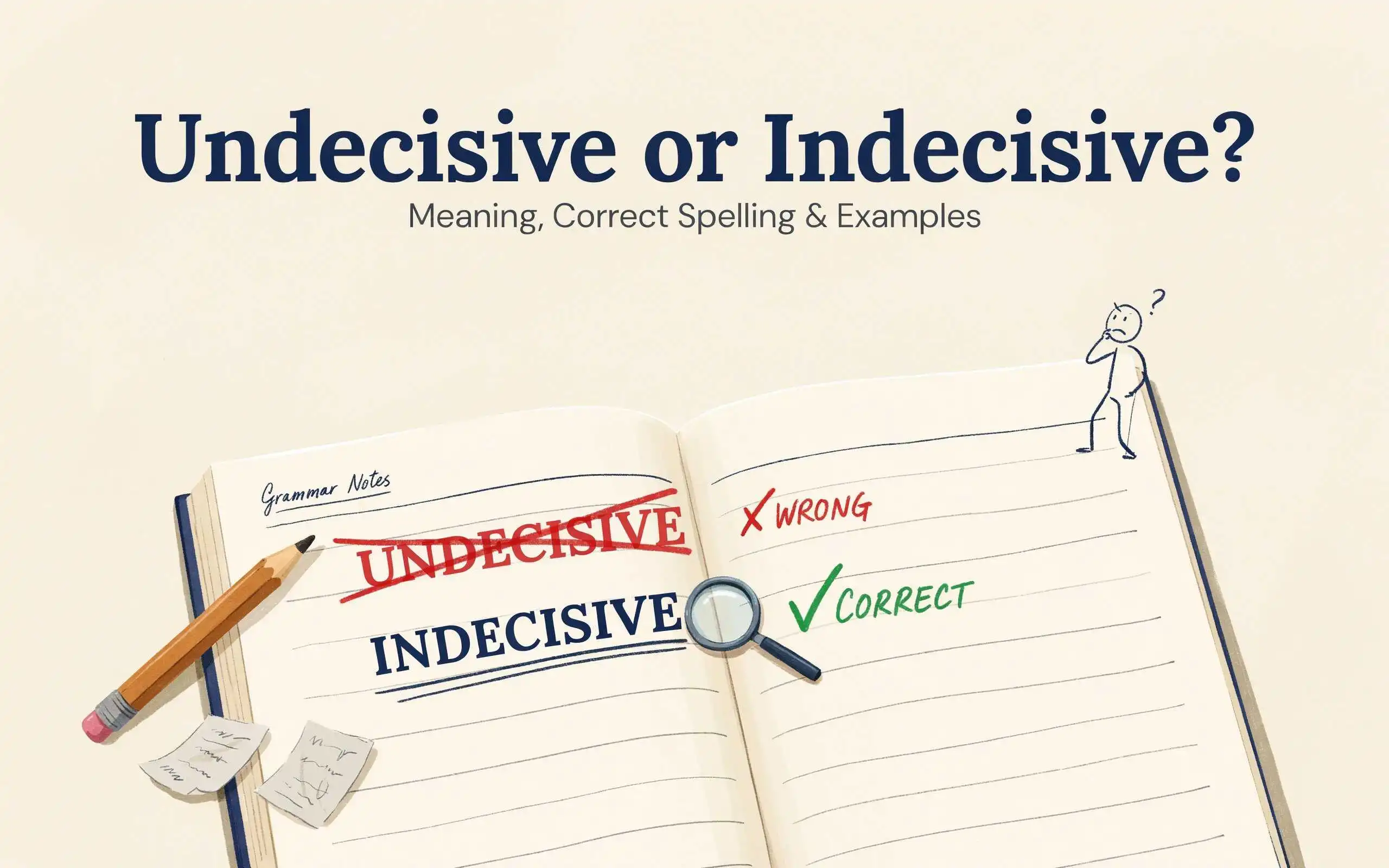
So, the clear answer is: “indecisive” is correct, and “undecisive” is incorrect.
People search this topic in many ways, such as is it indecisive or undecisive, is it undecisive or indecisive, and indecisive vs undecisive, mainly because the two words sound similar and both “in-” and “un-” look like valid prefixes in English. However, only one form is officially accepted.
In this article, you’ll understand the correct spelling, meaning, usage, differences, and even real-life examples of the word indecisive, along with why so many people get confused.
Is It Indecisive or Undecisive? (Quick Answer)
The correct spelling is indecisive. The word undecisive is incorrect in standard English usage.
- ✔ Correct: indecisive
- ❌ Incorrect: undecisive
If you are wondering is it indecisive or undecisive, the answer is simple: always use indecisive in writing, exams, and professional communication.
Indecisive vs Undecisive (Full Comparison)
When comparing indecisive vs undecisive, the confusion comes from how English prefixes work.
“Indecisive” comes from the prefix “in-”, which often means “not,” combined with “decisive.” Over time, it evolved into a standard dictionary word.
| Feature | Indecisive | Undecisive |
|---|---|---|
| Correct spelling | Yes | No |
| Dictionary usage | Accepted | Not recognized |
| Meaning | Unable to make decisions quickly | Incorrect variant |
| Usage in writing | Formal & informal | Avoid using |
The keyword indecisive vs undecisive often appears in grammar-based searches because users are unsure which spelling is correct. The truth is that only indecisive is accepted in English grammar.
Is It Undecisive or Indecisive? (Why People Get Confused)
Many users search is it undecisive or indecisive because both forms seem logical. The prefix “un-” is very common in English words like “unclear,” “unknown,” and “unhappy,” so people naturally assume “undecisive” should also exist.
However, English does not always follow predictable patterns. The correct formation is historical and linguistic, not logical.
This confusion is one of the most common spelling mistakes in English vocabulary, especially among learners and casual writers.
What Does Indecisive Mean? (Simple Definition)
The word indecisive meaning refers to someone who struggles to make decisions quickly or confidently.
In simple terms, indecisive means:
A person who finds it difficult to choose between options.
It is commonly used in everyday communication, especially when describing personality traits or behavior in uncertain situations.
Indecisive in Sentences (Real Examples)
Here are some natural examples of how the word is used in real life:
- She is always indecisive when choosing what to wear.
- He became indecisive about accepting the job offer.
- I felt indecisive while ordering food at the restaurant.
- Being indecisive can slow down decision-making in business.
- The team was indecisive during the final moments of the match.
These examples show how indecisive meaning in sentences changes depending on emotional or situational context.
Synonyms and Antonyms of Indecisive
Understanding synonyms helps improve vocabulary and SEO semantic relevance.
Synonyms
- Hesitant
- Unsure
- Uncertain
- Wavering
- Irresolute
- Doubtful
Antonyms
- Decisive
- Confident
- Determined
- Certain
- Resolute
Is the word indecisive or undecisive?
The correct word is indecisive. The form “undecisive” is not considered standard English and is generally treated as a spelling mistake in formal writing, exams, and professional communication.
The word indecisive is widely accepted in dictionaries and used in both spoken and written English to describe someone who struggles to make decisions.
Why is it indecisive and not undecisive?
It is indecisive and not undecisive because of how the word evolved from Latin-based English structure.
The correct form comes from:
- in- (a prefix meaning “not”)
- decisive (able to make decisions)
So indecisive literally means “not decisive.”
The confusion happens because many English words use the prefix “un-” (like unhappy, unclear), so people wrongly assume undecisive should also exist. However, in standard English, the correct historical and grammatical formation is indecisive.
What is the meaning of undecisive?
The word undecisive is not a standard English word, so it does not have an official dictionary meaning.
However, when people use it informally, they usually intend to mean:
Someone who is unable to make decisions quickly or confidently.
In proper English, this meaning should always be expressed using the word indecisive.
Staring vs Starring: Meaning, Difference, Usage, Examples, and Common Mistakes
Learn the spelling rules, regional differences, and real-world examples.
What does indecisive mean?
Indecisive means a person who finds it difficult to make choices or decisions.
In simple terms:
An indecisive person cannot quickly choose between options and often overthinks decisions.
Example:
- She is indecisive when choosing what to wear or eat.
It is commonly used in everyday language, psychology, and personality descriptions.
What is another word for indecisive?
Some common synonyms of indecisive include:
- Hesitant
- Unsure
- Uncertain
- Wavering
- Doubtful
- Irresolute
- Conflicted
These words are often used depending on the emotional or situational context of decision-making.
Is being indecisive good or bad?
Being indecisive is neither completely good nor completely bad. It depends on the situation.
When it can be bad:
- It slows down decision-making
- It can lead to missed opportunities
- It may create stress or confusion
When it can be good:
- It shows careful thinking
- It prevents impulsive decisions
- It allows better evaluation of options
So, indecisiveness can be a balanced trait depending on how it is managed.
What type of person is indecisive?
An indecisive person is someone who:
- Overthinks decisions
- Struggles to choose between options
- Seeks reassurance from others
- Fears making the wrong choice
- Takes longer than average to decide
This personality trait is often linked with careful thinking, anxiety, or high self-doubt, depending on the context.
What are the 4 villains of decision-making?
The “four villains” of decision-making refer to common psychological barriers that affect clear thinking:
- Overthinking – analyzing too many possibilities
- Fear of failure – worrying about making the wrong choice
- Lack of clarity – not having enough information
- Emotional bias – decisions influenced by feelings instead of logic
These factors often lead to indecisiveness and hesitation.
What signs are the most indecisive?
Certain personality signs are often considered more indecisive than others due to their emotional or analytical nature:
- Libra – known for balancing all options and struggling to choose
- Pisces – emotionally driven and easily influenced
- Gemini – dual nature can lead to changing decisions
- Cancer – overthinks emotional outcomes before deciding
While astrology is not scientific, these signs are commonly associated with decision-making hesitation and overthinking behavior in popular discussions.
Why People Confuse Indecisive and Undecisive
The confusion between indecisive spelling and undecisive spelling happens for several reasons:
- The prefix “un-” feels more natural in modern English
- People pronounce the word quickly and assume spelling
- Search engines autocomplete both variations
- Lack of grammar awareness among casual users
- Similar sound patterns in spoken English
This is why queries like indecisive spelling, correct spelling indecisive, and common spelling mistakes indecisive are very common.
Is “Undecisive” a Real Word?
No, undecisive is not a standard English word.
While it may appear in informal writing or online posts, dictionaries and formal grammar sources do not recognize it. This is why writers should always use indecisive in academic, professional, or SEO content.
Indecisive vs Undecided (Important Difference)
Many users confuse indecisive vs undecided, but they are not the same.
- Indecisive = a personality trait (difficulty making decisions)
- Undecided = a temporary state (not yet chosen)
Example:
- She is indecisive by nature.
- She is undecided about her career choice.
This distinction is important for clear communication and often appears in advanced grammar discussions.
Common Mistakes with Indecisive
Writers often make these errors when using the word:
- Writing “undecisive” instead of indecisive
- Confusing it with “undecided”
- Incorrect pronunciation-based spelling
- Overusing it without understanding meaning
Correct usage improves both writing quality and SEO content accuracy.
Indecisive Pickup Lines (Fun Usage Section)
Interestingly, the keyword indecisive pick up lines is also trending in search results. These are humorous or romantic lines based on hesitation or confusion in love.
Here are some examples:
Funny Indecisive Rizz Lines
- “I can’t decide between pizza or you… and honestly, I’m still thinking.”
- “Are you my type? Let me overthink that for a few hours.”
Romantic Indecisive Lines
- “I was going to choose a star for you, but I couldn’t decide which one is as bright as you.”
- “I’m indecisive, but I’m sure about you… maybe.”
Tinder Style Lines
- “Swipe left or right? I’ve been thinking for 10 minutes already.”
These playful lines show how the concept of indecisive rizz and flirting humor has become a modern search trend.
FAQs
Is it indecisive or undecisive?
The correct spelling is indecisive. “Undecisive” is incorrect.
What is the difference between indecisive and undecisive?
Indecisive is the correct word meaning unable to decide. Undecisive is not a standard English word.
Is undecisive a real word?
No, it is not recognized in formal English dictionaries.
Why do people say undecisive instead of indecisive?
It happens due to prefix confusion and pronunciation similarity.
How do you spell indecisive correctly?
It is spelled I-N-D-E-C-I-S-I-V-E.
Conclusion
The confusion between undecisive or indecisive is very common, but the correct form is always indecisive. The incorrect version “undecisive” comes from misunderstanding English prefix rules.
Understanding this difference improves your grammar, writing clarity, and communication skills. Whether you’re writing an essay, blog, or SEO article, always use indecisive to ensure accuracy and professionalism.
In short:
Indecisive is correct. Undecisive is wrong.