
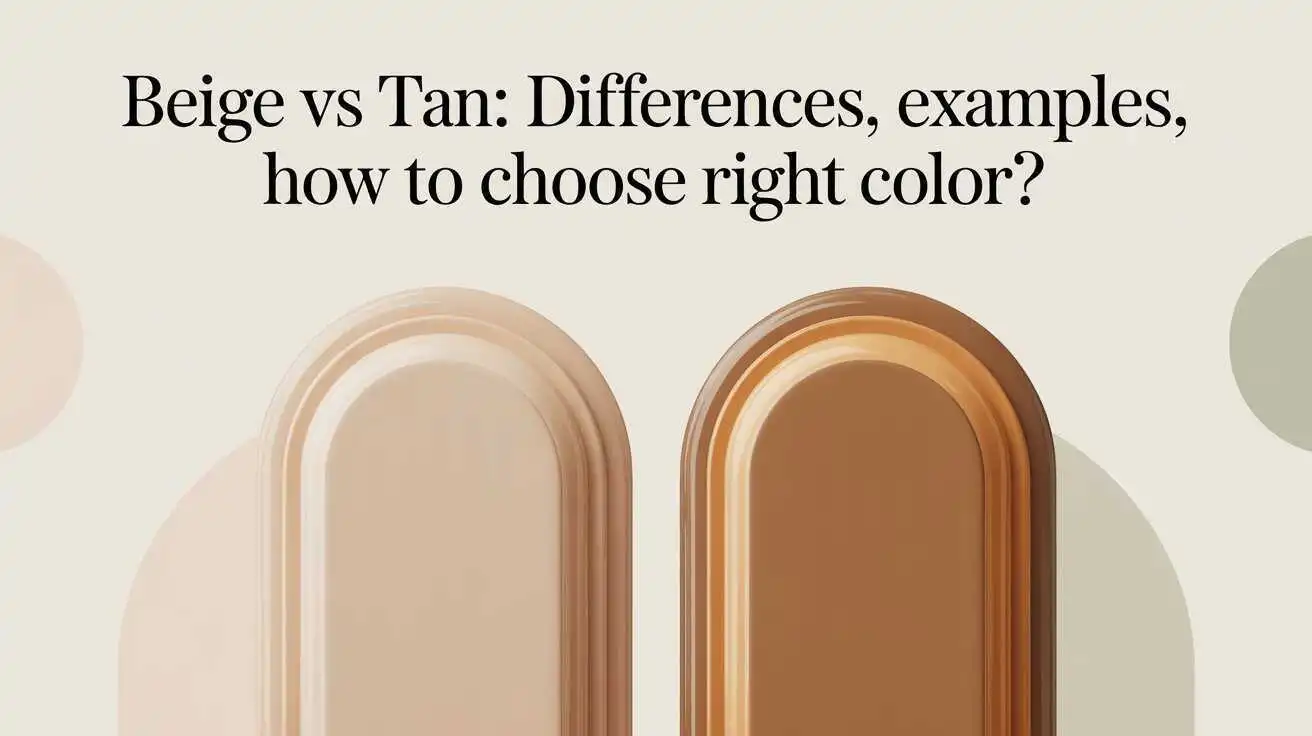
Beige vs tan it sounds simple, right? Two neutral colors. Almost the same. But here’s the thing… most people mix them up, even designers sometimes pause before answering.
And if you’ve ever stood in a paint aisle, picked clothes online, or tried to match colors in your room, you’ve probably asked yourself:
“Wait… is this beige or tan?”
Let’s clear it up—properly.
Quick Answer
Beige and tan are both neutral colors, but beige is lighter and more muted, often with gray or soft yellow undertones. Tan is darker and warmer, with stronger brown-yellow tones. Choose beige for a clean, airy look and tan for a warm, cozy feel. Lighting and materials can make them look surprisingly similar.
AI Overview Summary
Beige and tan are often confused because both are neutral colors with warm undertones. The key difference is that beige is lighter and softer, while tan is deeper and warmer. However, lighting, materials, and surrounding colors can change how they appear. Beige works best for bright, minimal styles, while tan adds warmth and richness.
What Is the Difference Between Beige and Tan?
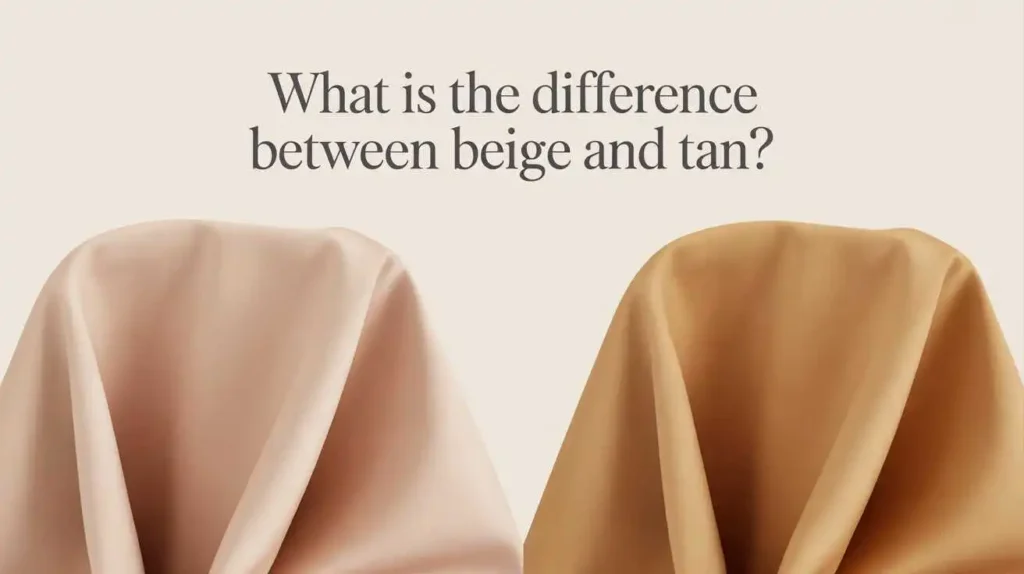
Beige is a light, soft neutral, while tan is a deeper, warmer shade of brown.
That’s the short version.
But if you stop there, you’ll still get confused in real life. So let’s break it down properly.
What Is Beige?
Beige is a pale neutral color with subtle gray or yellow undertones.
It’s often described as:
- Soft
- Muted
- Clean
You’ll usually see beige in:
- Minimalist interiors
- Light clothing
- Modern design
Think of beige as quiet and subtle. It doesn’t demand attention—it blends in beautifully.
What Is Tan?
Tan is a medium-to-dark neutral color with warm brown and yellow undertones.
It feels:
- Warmer
- Richer
- More grounded
You’ll often find tan in:
- Leather products
- Earthy outfits
- Cozy home designs
Tan stands out more than beige—but still stays neutral.
Beige vs Tan — Key Differences at a Glance
The main differences come down to lightness, warmth, and overall feel.
| Feature | Beige | Tan |
|---|---|---|
| Lightness | Light | Medium to dark |
| Undertone | Gray or soft yellow | Yellow and brown |
| Mood | Calm, minimal | Warm, cozy |
| Best Use | Bright spaces, modern styles | Warm spaces, earthy looks |
| Visual Impact | Subtle | More noticeable |
Quick takeaway: If beige whispers… tan speaks a little louder.
Why Do Beige and Tan Look So Similar?
Because your eyes don’t see color in isolation—they see context.
Most people miss this.
You’re not just seeing the color. You’re seeing:
- Lighting
- Material
- Surroundings
And all of these can trick your brain.
How Lighting Changes Everything
Lighting can completely shift how beige and tan look.
- Warm light → makes beige look like tan
- Cool light → makes tan look lighter
That’s why a color you loved in the store looks different at home.
READ MORE >>> Dought vs Doubt: Meaning, Difference, Correct Spelling, and How to Use It Correctly
Material Matters More Than You Think
The same color behaves differently on different surfaces.
- Paint reflects light
- Fabric absorbs it
- Leather adds depth
So yes… A beige wall and a beige shirt can look like two different colors.
Surrounding Colors Create Illusions
Colors change depending on what’s around them.
Place beige next to:
- White → it looks darker
- Brown → it looks lighter
This is called contrast effect, and it’s one of the biggest reasons people get confused.
Mini Case Study: When Beige Turns Into Tan
A homeowner paints their living room “light beige.”
During the day:
- Natural sunlight → room looks bright and neutral
At night:
- Warm bulbs → walls suddenly look tan and warmer
Same paint. Same room.
Different perception.
Lesson: Never judge beige or tan in just one lighting condition.
The 3-Layer Color Reality Model™
Here’s a simple way to finally understand this.
Color isn’t just what it is—it’s how it behaves.
Layer 1 – Base Color
Beige is lighter and muted. Tan is deeper and warmer.
This is the actual pigment difference.
Layer 2 – Environment
Lighting and surroundings change how the color appears.
Even a perfect beige can look tan in the wrong light.
Layer 3 – Perception
Your eyes (and screens) interpret color differently.
- Cameras shift tones
- Screens distort colors
- Your brain adjusts based on contrast
That’s why online shopping for colors can be risky.
Beige vs Tan — Which One Should You Choose?
Choose beige for brightness and simplicity. Choose tan for warmth and depth.
Let’s make it practical.
Choose Beige If…
- You want a clean, modern look
- You need to brighten a space
- You prefer a minimal aesthetic
Beige works best when you want things to feel light and open.
Choose Tan If…
- You want a warm, cozy vibe
- You like earthy tones
- You need something that hides wear and dirt better
Tan adds character and depth.
Expert Tip (Most People Ignore This)
Always test colors:
- In daylight
- At night
- Next to other colors
One sample is never enough.
Beige vs Tan in Real Life
In Interior Design
Beige makes rooms feel bigger and brighter. Tan makes them feel warmer and more grounded.
- Beige → modern, minimal homes
- Tan → cozy, traditional spaces
In Fashion
Beige looks soft and subtle. Tan adds contrast and warmth.
Example:
- Beige outfit → clean, elegant
- Tan jacket → bold, earthy
In Everyday Products
Look at:
- Shoes
- Bags
- Furniture
You’ll notice something interesting…
Brands often label similar shades differently.
Which leads us to a hidden problem.
The Naming Trap: Why Beige and Tan Get Mixed Up
Color names are not standardized.
That means:
- One brand’s “beige” = another brand’s “tan”
- Paint companies use marketing names
- Fashion labels are inconsistent
So when you think: “This doesn’t look like beige…”
You’re probably right.
Beige vs Tan — Pros and Cons
Beige
Pros:
- Brightens spaces
- Very versatile
- Works with almost everything
Cons:
- Can feel flat
- Shows dirt easily
Tan
Pros:
- Warm and inviting
- Hides wear better
- Adds richness
Cons:
- Can feel darker
- Less minimal
Beige vs Tan vs Greige — What’s the Difference?
Greige is a mix of gray and beige, sitting between cool and warm tones.
| Color | Tone Type | Feel |
|---|---|---|
| Beige | Warm-neutral | Light, soft |
| Tan | Warm | Rich, earthy |
| Greige | Cool-neutral | Balanced, modern |
Greige is trending because it solves the “too warm vs too cool” problem.
Frequently Asked Questions
Yes, beige is lighter and more muted, while tan is deeper and warmer.
No, they are different. But lighting and surroundings can make them look very similar.
Tan is warmer because it contains stronger brown and yellow tones.
Because of lighting, material, and contrast effects, which change how your eyes perceive color.
It depends.
Choose beige for brightness
Choose tan for warmth
Final Thoughts
Here’s the truth most articles won’t tell you:
Beige vs tan isn’t just about color—it’s about perception.
You’re not just choosing between two shades. You’re choosing how a space feels. How an outfit looks. How something is experienced.
And once you understand that…
You stop guessing.
You start choosing with confidence.
That’s the real difference.